
Teamwork is at the heart of every memorable event, yet mastering collaborative skills takes more than simply working alongside others. For future event professionals, understanding how shared responsibility and active engagement shape successful projects is essential. By embracing collaborative learning, you tap into real-world strategies that transform classroom theory into practical skills, positioning yourself ahead in a competitive industry.
Table of Contents
- Defining Collaborative Learning In Practice
- Types Of Collaborative Learning Approaches
- Key Skills Developed Through Collaboration
- Practical Applications In Event Management
- Maximising Job Readiness And Industry Impact
Key Takeaways
| Point | Details |
|---|---|
| Collaborative Learning Enhances Engagement | This educational approach fosters active participation and skill development among students, transforming their role from passive recipients to active contributors. |
| Practical Applications Bridge Theory with Practice | Implementing real-world event management scenarios in learning promotes critical problem-solving capabilities essential for industry readiness. |
| Diverse Strategies Foster Skill Development | Various collaborative learning methods such as Problem-Based Learning and Team-Based Learning cultivate essential skills like communication, teamwork, and critical thinking. |
| Work Integrated Learning Maximises Employability | Engaging in actual industry projects helps students build competencies and create networks that enhance their job readiness in event management. |
Defining Collaborative Learning in Practice
Collaborative learning represents a transformative educational approach where students actively engage in shared knowledge construction through interactive experiences. Unlike traditional learning models, this method emphasises collective understanding and mutual skill development across diverse academic disciplines.
In event management education, collaborative learning takes on a unique dimension. Enabling learners from diverse backgrounds to achieve learning goals requires creating an inclusive, non-hierarchical environment where participants can freely exchange insights and experiences.
Key characteristics of collaborative learning in event management include:
- Shared responsibility for learning outcomes
- Active participation from all team members
- Open communication and knowledge exchange
- Respect for individual perspectives and experiences
- Problem-solving through collective intelligence
Successful implementation demands careful structuring of learning experiences. Instructors must design scenarios that encourage meaningful interaction, create safe spaces for dialogue, and facilitate genuine knowledge co-creation. These environments allow students to develop critical interpersonal skills essential for event management professionals.
Collaborative learning transforms passive recipients into active contributors, turning educational experiences into dynamic knowledge networks.
Practical Application involves creating structured group projects, simulation exercises, and real-world event planning challenges that require students to work together, negotiate roles, and develop collective strategies.
Pro tip: When designing collaborative learning experiences, focus on creating scenarios that mirror real-world event management challenges and require genuine interdependence among participants.
Types of Collaborative Learning Approaches
Collaborative learning encompasses multiple educational strategies that transform traditional learning environments by promoting interactive and cooperative knowledge acquisition. Multiple learning approaches offer diverse methods for engaging students in meaningful educational experiences, particularly within event management disciplines.
In event management education, several prominent collaborative learning approaches stand out:
- Problem-Based Learning (PBL): Focuses on solving real-world event scenarios
- Team-Based Learning (TBL): Emphasises structured group work and collective problem-solving
- Peer Instruction: Encourages knowledge sharing between students
- Group Project Methods: Simulates professional event management teamwork
Comparative studies of collaborative approaches reveal that each method offers unique advantages in developing critical professional skills. Problem-Based Learning, for instance, challenges students to tackle complex event management scenarios, requiring them to apply theoretical knowledge to practical situations.
Here’s a comparison of collaborative learning approaches relevant for event management:
| Approach | Core Focus | Typical Activities | Strengths |
|---|---|---|---|
| Problem-Based Learning | Solving real scenarios | Case studies, simulation | Encourages critical thinking |
| Team-Based Learning | Structured group work | Peer assessments, group tasks | Promotes accountability and unity |
| Peer Instruction | Knowledge exchange | Small group discussions | Develops communication skills |
| Group Project Method | Professional teamwork | Event planning, project delivery | Builds leadership and teamwork |
Team-Based Learning provides a structured framework where students work in consistent teams, completing individual preparation tasks before engaging in group activities. This approach ensures individual accountability while promoting collective understanding and skill development.
Collaborative learning transforms educational experiences from passive reception to active knowledge construction.
Peer instruction methods allow students to explain concepts to one another, reinforcing learning through articulation and collective understanding. This approach is particularly effective in event management, where communication and knowledge sharing are critical professional skills.
Practical Considerations in implementing these approaches include designing appropriate learning scenarios, establishing clear group dynamics, and creating assessment methods that reward both individual contribution and team performance.
Pro tip: Select collaborative learning approaches that closely mirror real-world event management team dynamics to maximise student engagement and skill transfer.
Key Skills Developed Through Collaboration
Collaborative learning environments are powerful platforms for developing essential professional skills, particularly in event management. Collaborative learning systems play a critical role in cultivating competencies that extend far beyond traditional classroom learning, preparing students for dynamic professional challenges.
The key skills developed through collaborative approaches include:
- Communication Skills: Enhancing verbal and written interaction
- Critical Thinking: Developing analytical and problem-solving capabilities
- Teamwork: Learning to work effectively in diverse group settings
- Conflict Resolution: Navigating interpersonal challenges constructively
- Leadership Development: Understanding team dynamics and motivation
Learning analytics systems demonstrate that collaborative experiences enable students to receive real-time feedback on group interactions, allowing continuous skill refinement. This approach transforms learning from a passive reception of information to an active, participatory process.
In event management, communication skills are particularly crucial. Collaborative learning environments simulate real-world scenarios where students must articulate ideas, negotiate priorities, and coordinate complex logistical challenges. These interactions develop nuanced communication strategies that are essential for successful event planning and execution.
Collaborative learning bridges the gap between theoretical knowledge and practical professional competence.
Critical thinking emerges as another significant skill developed through collaborative approaches. Students learn to analyse problems from multiple perspectives, synthesise diverse viewpoints, and develop innovative solutions – skills directly applicable to the complex world of event management.

Professional Implications of these collaborative skill developments include improved employability, enhanced adaptability, and a more holistic understanding of professional challenges.
To clarify practical skill development, here’s a summary of collaborative skills in event management:
| Skill Area | Application Context | Professional Benefit |
|---|---|---|
| Communication | Client meetings, team briefings | Effective information transfer |
| Critical Thinking | Logistics, risk analysis | Innovative problem solving |
| Teamwork | Multicultural event planning | Harmonious task coordination |
| Leadership | Task delegation, motivation | Drives project success |
| Conflict Resolution | Negotiating priorities | Maintains positive outcomes |
Pro tip: Actively seek out collaborative learning opportunities that challenge you to step outside your comfort zone and engage with diverse perspectives.
Practical Applications in Event Management
Collaborative learning transforms theoretical knowledge into practical skills through immersive, real-world experiences. Experiential learning approaches enable students to develop essential event management competencies by bridging academic concepts with industry requirements.
Practical applications in event management collaborative learning include:
- Simulated Event Planning: Designing comprehensive event strategies
- Live Project Execution: Managing actual event logistics
- Client Interaction Scenarios: Developing professional communication skills
- Risk Management Workshops: Analysing potential event challenges
- Budget Management Exercises: Creating and tracking financial plans
These practical applications provide students with hands-on experiences that simulate real-world event management scenarios. Students learn to navigate complex challenges, work within team structures, and develop critical problem-solving skills that are essential for professional success.
In Indian event management contexts, collaborative learning often involves working on cultural events, corporate conferences, and wedding celebrations that require nuanced understanding of local dynamics. Students might collaborate on projects ranging from traditional festival management to contemporary corporate event planning, gaining insights into diverse event landscapes.
Practical experience transforms theoretical knowledge into professional competence.
Technology plays a crucial role in these collaborative learning experiences. Students use project management tools, communication platforms, and simulation software to replicate professional work environments, ensuring they are industry-ready upon graduation.
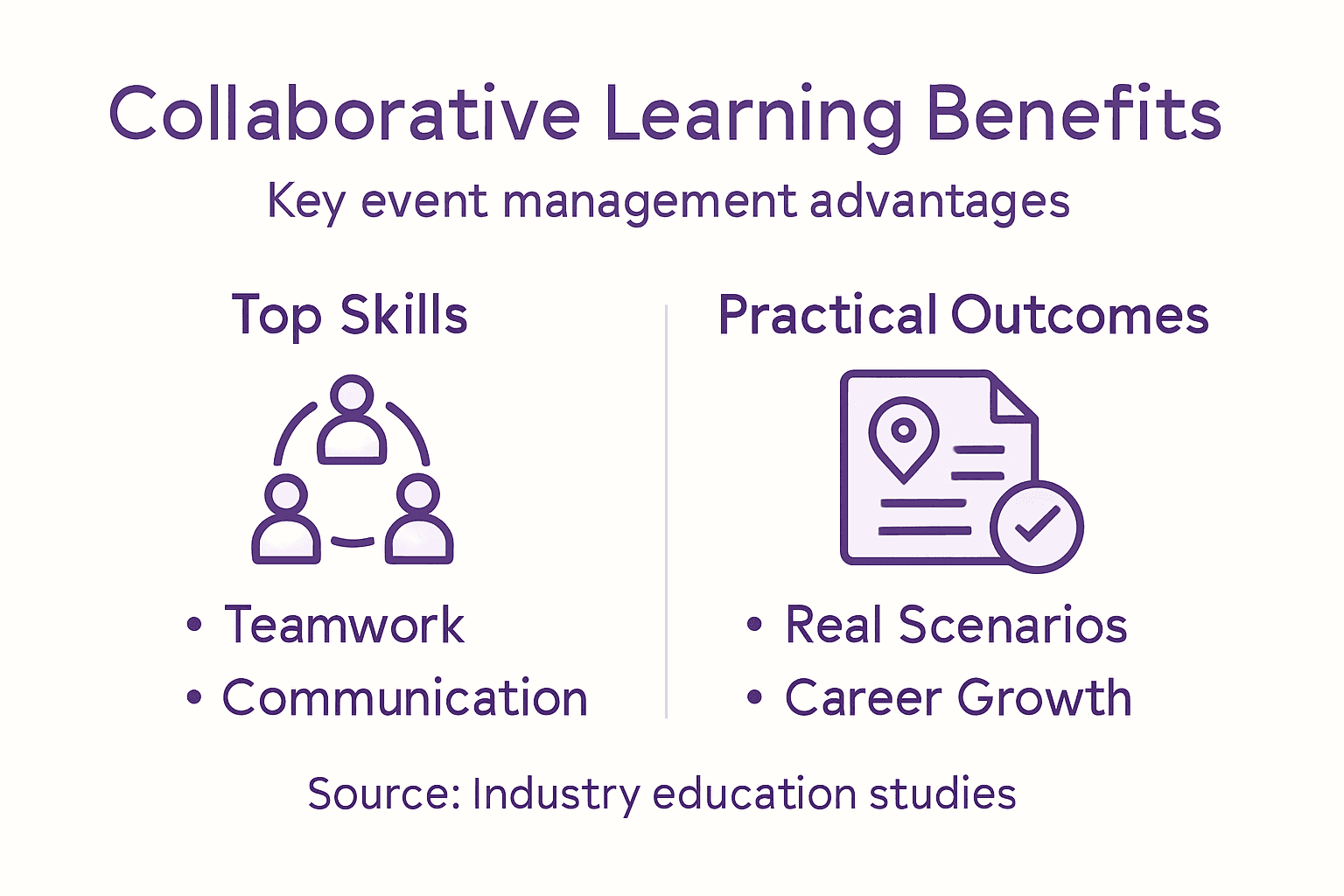
Professional Development through these practical applications extends beyond technical skills, encompassing emotional intelligence, leadership capabilities, and adaptive thinking required in dynamic event management environments.
Pro tip: Document every collaborative project meticulously, creating a portfolio that demonstrates your practical skills and collaborative capabilities.
Maximising Job Readiness and Industry Impact
Work Integrated Learning represents a transformative approach to professional development in event management education. Integrating real-world industry projects bridges the critical gap between academic theory and professional practice, ensuring students are comprehensively prepared for industry challenges.
Key strategies for maximising job readiness include:
- Industry Mentorship: Connecting students with experienced professionals
- Live Project Participation: Engaging in actual event management scenarios
- Skills Portfolio Development: Documenting practical achievements
- Professional Networking: Building meaningful industry connections
- Continuous Learning Mindset: Adapting to evolving industry requirements
Work Integrated Learning programs accelerate graduate employability by creating structured pathways between academic learning and professional expectations. In the dynamic Indian event management landscape, these programs provide students with critical opportunities to demonstrate practical competence.
Indian event management requires nuanced understanding of cultural contexts, technological integration, and rapid adaptation. Collaborative learning approaches prepare students by simulating complex real-world scenarios, developing not just technical skills but also emotional intelligence and cultural sensitivity.
Job readiness extends beyond technical knowledge to encompass adaptive thinking and professional resilience.
Technology and digital platforms play a crucial role in modern event management career preparation. Students learn to leverage digital tools, understand data analytics, and develop technological fluency that distinguishes them in a competitive job market.
Professional Transformation occurs through immersive experiences that challenge students to think strategically, communicate effectively, and solve complex logistical problems in real-time event management contexts.
Pro tip: Create a dynamic professional portfolio that showcases not just your achievements, but your ability to learn, adapt, and solve complex event management challenges.
Elevate Your Event Management Career Through Collaborative Learning
Collaborative learning unlocks the true potential of event management education by fostering teamwork, communication, and practical problem-solving skills that are essential in today’s dynamic industry. If you strive to overcome challenges like real-world event coordination, complex logistics, and effective client communication, embracing a collaborative approach is the key to your success. At teami.org, we specialise in transforming these vital concepts into actionable skills through our comprehensive certification programmes and real-life project exposure.
Benefit from 24 years of industry expertise combined with hands-on training in areas such as social, sports, wedding, and corporate events. Our partnership with DNA Entertainment Networks ensures you gain not only knowledge but also practical insights and job placements. Don’t wait to build critical skills like leadership, conflict resolution, and teamwork that this article highlights as crucial for event management professionals. Take the next step towards a fulfilling career by exploring our specially designed courses and real event participation opportunities today.
Discover how to translate collaborative learning into real success with teami.org. Ready to start your journey to becoming an industry-ready event manager click here to connect with us now at https://team-i-app-code-production.up.railway.app/api/go/wa?src=collaborative-learning-benefits-event and transform your potential into professional achievement.
Frequently Asked Questions
What are the key benefits of collaborative learning in event management?
Collaborative learning in event management promotes essential skills such as communication, teamwork, critical thinking, and problem-solving. It prepares students for real-world challenges by simulating industry scenarios and fostering an inclusive learning environment.
How does collaborative learning enhance practical skills in event management?
By engaging in hands-on projects, simulations, and real-world scenarios, students develop practical skills necessary for effective event planning and execution, such as budget management, risk assessment, and logistical coordination.
What types of collaborative learning approaches are effective in event management education?
Effective approaches include Problem-Based Learning (PBL), Team-Based Learning (TBL), Peer Instruction, and Group Project Methods, each offering unique strategies for enhancing skills and knowledge related to event management.
How can students maximise job readiness through collaborative learning experiences?
Students can maximise job readiness by participating in industry mentorship, engaging in live project execution, developing a skills portfolio, and continuously adapting to evolving industry needs, all within collaborative learning frameworks.
Recommended
- How to Improve Team Collaboration for Event Success – team I
- Experiential Learning: Shaping Future Event Managers – team I
- Importance of Feedback in Training – Unlocking Real Skill Growth – team I
- Productivity Tips for Students: Succeed in Event Management – team I
- Photo Booth Rentals for Corporate Events: Boost Engagement
Thinking about a career in event management?
team I is Bangalore’s only EEMA-certified event management institute, running for 24 years, where students work on real live events with real budgets and real deadlines rather than classroom simulations. See the full range of event management courses in Bangalore, or go straight to the flagship Certificate Program in Event Management (CPEM).