
Event management in Bangalore is rapidly changing, and those aiming for top roles know that future success means far more than planning skills. With research showing that digital and human workplace skills will be essential by 2026, aspiring professionals want certifications that are recognised not just by Indian companies, but also by british employers. This guide explains the must-have abilities, from technology integration to empathy, that set standout candidates apart as the industry transforms.
Table of Contents
- Defining Future Workplace Skills In Events
- Key Digital And Human Skills For 2026
- Technology, AI, And Hybrid Event Readiness
- Sustainability, Wellbeing, And Inclusion Imperatives
- Adapting Through Practical Training And Internships
Key Takeaways
| Point | Details |
|---|---|
| Future Skills | Event managers must develop advanced digital literacy and emotional intelligence to thrive in a rapidly evolving landscape. |
| Hybrid Event Readiness | Mastering AI and immersive technologies will be essential for creating personalised attendee experiences in hybrid events. |
| Sustainability Focus | A commitment to sustainable and inclusive practices will be critical in shaping responsible event management strategies. |
| Practical Training Importance | Engaging in hands-on training and internships is vital for building the necessary skills and confidence in event professionals. |
Defining Future Workplace Skills in Events
The event management landscape is rapidly transforming, driven by technological disruptions and evolving professional expectations. Modern event professionals must develop a sophisticated skill set that goes beyond traditional event planning capabilities. Global employability research highlights the critical competencies required to thrive in this dynamic industry.
Cognitive skills will become paramount for future event managers. The World Economic Forum’s research underscores the importance of analytical thinking and creative problem-solving as foundational workplace competencies. Event professionals must cultivate abilities that enable them to design innovative experiences, anticipate audience needs, and navigate complex logistical challenges. This requires developing strong cognitive flexibility that allows rapid adaptation to changing technological and social environments.
Key future workplace skills for event managers include:
- Advanced digital literacy
- Cross-cultural communication
- Strategic design thinking
- Technology integration capabilities
- Emotional intelligence
- Data-driven decision making
Additionally, self-efficacy skills like resilience, adaptability, and continuous learning will distinguish top-tier event management professionals. These attributes enable practitioners to navigate uncertainty, embrace emerging technologies, and create transformative event experiences that resonate with diverse audiences.
Pro Tip: Invest at least 5 hours weekly in upskilling through online courses, industry webinars, and professional development resources to stay ahead of emerging workplace trends.
Key Digital and Human Skills for 2026
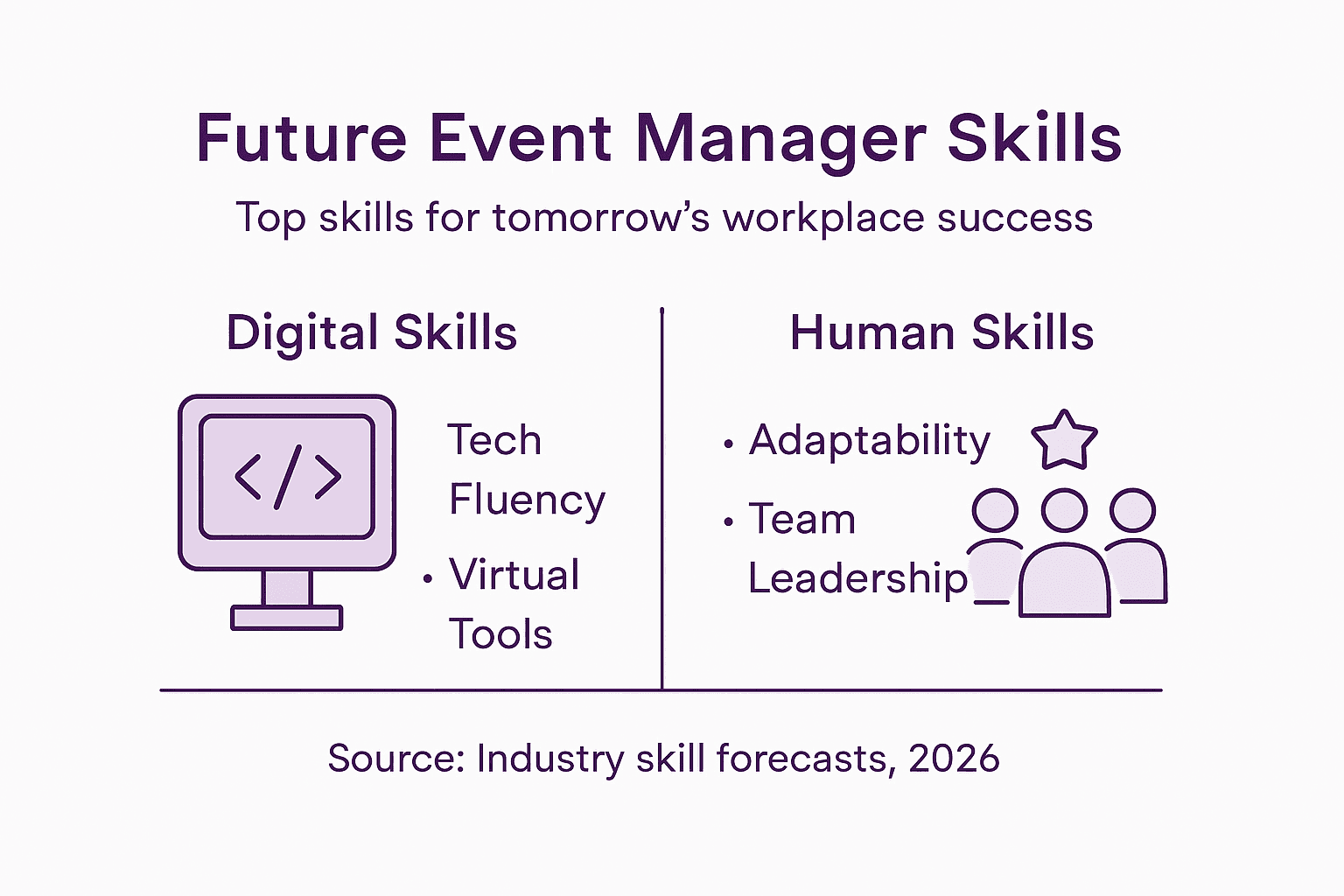
Event management in 2026 demands a sophisticated blend of digital prowess and human-centred capabilities. Future workplace research emphasises that successful professionals will need to harmonise technological literacy with profound interpersonal skills.
Digital competencies form the foundational layer of future event management skills. Technological adaptability will be crucial, encompassing abilities like artificial intelligence comprehension, advanced data analytics, virtual and augmented reality integration, and sophisticated digital collaboration tools. Event managers must become adept at leveraging emerging technologies to create immersive, personalised experiences that transcend traditional event boundaries.
Equally critical are the human-centric skills that cannot be replicated by technology. Emotional intelligence, leadership, empathy, and cross-cultural communication will differentiate exceptional event professionals. These skills enable managers to design meaningful connections, navigate complex interpersonal dynamics, and craft experiences that resonate on a deeply human level. Key human skills include:
- Advanced communication strategies
- Cultural intelligence
- Conflict resolution
- Adaptive leadership
- Creative problem-solving
- Resilience and stress management
The most successful event managers will be those who can seamlessly integrate digital tools with genuine human understanding, creating transformative experiences that balance technological innovation with emotional connection.
The following table summarises the differences between digital and human-centric skills for future event managers:
| Skill Type | Primary Focus | Example Impact | Method of Development |
|---|---|---|---|
| Digital Skills | Technology proficiency | Enhanced data analytics | Online courses, simulations |
| Human-Centric | Emotional and social intelligence | Improved team collaboration | Mentoring, real-world practice |
| Hybrid Skills | Integrating tech with empathy | Personalised event design | Interdisciplinary workshops |
Pro Tip: Develop a personal learning ecosystem by dedicating two hours weekly to exploring emerging technologies and attending cross-disciplinary workshops to enhance both digital and human skills.
Technology, AI, and Hybrid Event Readiness
Emerging workplace technologies are fundamentally transforming event management, demanding a sophisticated approach to digital integration and strategic technological adaptation. Event managers must develop a comprehensive understanding of hybrid event ecosystems that seamlessly blend physical and digital experiences.
Artificial intelligence represents a critical technological frontier for event professionals. AI-driven personalisation will revolutionise attendee experiences, enabling precise audience segmentation, predictive engagement analytics, and intelligent content recommendation systems. Event managers will need advanced skills in machine learning platforms, virtual interaction design, and data-driven participant journey mapping to leverage these technological capabilities effectively.
Key technological competencies for hybrid event readiness include:
- Advanced virtual event platform management
- Real-time digital engagement strategies
- Artificial intelligence integration techniques
- Cybersecurity and data privacy protocols
- Immersive technology implementation
- Digital metrics and performance analytics
Successful hybrid event management requires a nuanced balance between technological sophistication and human-centred design. Professionals must develop the ability to create seamless, intuitive experiences that feel natural and engaging across both physical and digital environments, transcending traditional event boundaries.
Pro Tip: Allocate monthly budget for experimenting with emerging event technologies and participate in virtual technology demonstration workshops to stay ahead of industry innovations.
Sustainability, Wellbeing, and Inclusion Imperatives
Emerging workplace priorities are reshaping event management through a holistic lens of sustainability, human wellbeing, and meaningful inclusion. Event managers must evolve beyond traditional operational frameworks to become strategic architects of responsible and empathetic professional experiences.

Sustainable event design represents a comprehensive approach that extends far beyond environmental considerations. This multifaceted strategy encompasses ecological responsibility, social equity, economic viability, and participant wellbeing. Event professionals will need to develop sophisticated skills in carbon footprint reduction, ethical sourcing, accessible design, and creating inclusive environments that accommodate diverse participant needs and backgrounds.
Critical imperatives for sustainable and inclusive event management include:
- Implementing zero-waste event protocols
- Designing universally accessible event experiences
- Promoting cultural and demographic diversity
- Integrating mental health and wellbeing support
- Creating transparent and equitable participant engagement
- Developing ethical technological infrastructures
Successful event managers will recognise that sustainability and inclusion are not peripheral considerations but fundamental design principles. They must cultivate a nuanced understanding of how interconnected human and environmental systems shape meaningful professional interactions, moving beyond tokenistic approaches to genuine, transformative practice.
This table highlights how sustainability, wellbeing, and inclusion influence event management outcomes:
| Focus Area | Business Benefit | Example Metric |
|---|---|---|
| Sustainability | Enhanced event reputation | Waste reduction rate |
| Wellbeing | Increased attendee satisfaction | Post-event wellbeing survey |
| Inclusion | Broader audience engagement | Diversity of participants |
Pro Tip: Conduct a comprehensive inclusion and sustainability audit for each event, measuring both quantitative metrics and qualitative participant experiences to drive continuous improvement.
Adapting Through Practical Training and Internships
Experiential learning strategies are transforming event management education, emphasising hands-on training as the most effective pathway for developing future-ready professionals. Internships and practical projects have evolved from supplementary experiences to critical mechanisms for skill acquisition and industry integration.
The practical training ecosystem demands a multifaceted approach that goes beyond traditional classroom learning. Event management students must engage with immersive experiences that simulate real-world challenges, providing opportunities to develop technical competencies, technological adaptability, and nuanced professional judgment. This approach requires strategic collaboration between educational institutions, industry partners, and students to create meaningful learning environments.
Key components of effective practical training include:
- Structured industry mentorship programmes
- Real-time project simulations
- Technology-enabled learning platforms
- Interdisciplinary collaboration opportunities
- Personalised skill development frameworks
- Comprehensive performance feedback mechanisms
Successful event management professionals will distinguish themselves through their ability to seamlessly translate theoretical knowledge into practical execution. This requires developing a growth mindset that embraces continuous learning, technological adaptation, and the capacity to navigate complex professional landscapes with confidence and creativity.
Pro Tip: Create a personal skills portfolio documenting each practical experience, capturing specific challenges, solutions implemented, and lessons learned to demonstrate professional growth.
Master Future Workplace Skills for Event Management Today
The demand for event managers skilled in advanced digital literacy, emotional intelligence, and hybrid event technologies is higher than ever. This article highlights critical challenges you face such as adapting to AI-driven personalisation, balancing technology with human-centred design, and fostering sustainability and inclusion. These key goals require continuous learning, practical exposure, and strategic upskilling to stay competitive in an evolving industry.
At team.i.org, we understand these exact pain points. With over 23 years of industry experience, our specialised certification programs combine online, hybrid, and hands-on training through real event internships. Our courses cover essential skills including digital event management, emotional intelligence, and sustainable event planning alongside strategic mentorship from industry leaders like DNA Entertainment Networks. Whether you aim to master AI integration or build resilience and adaptive leadership, our training is tailored to prepare you for the future event landscape.
Ready to bridge the gap between theory and practice and future-proof your event management career? Discover detailed course offerings, industry insights, and placement opportunities at team.i.org. Visit our landing page now to start your journey towards becoming a transformative event professional with the exact skills employers are seeking.
Frequently Asked Questions
What skills should event managers focus on developing for the future?
Event managers should focus on advanced digital literacy, cross-cultural communication, strategic design thinking, technology integration capabilities, emotional intelligence, and data-driven decision-making.
How can emotional intelligence benefit event managers?
Emotional intelligence allows event managers to navigate complex interpersonal dynamics, design meaningful connections, and craft experiences that resonate on a human level, enhancing overall attendee satisfaction.
What technological competencies are essential for hybrid event management?
Key technological competencies for hybrid event management include advanced virtual event platform management, real-time digital engagement strategies, AI integration techniques, cybersecurity protocols, and performance analytics.
How can event managers ensure sustainability and inclusion in their events?
Event managers can implement zero-waste event protocols, create universally accessible experiences, promote diversity, integrate mental health support, and maintain transparency in participant engagement to ensure sustainability and inclusion.