

More than 80 percent of British event companies now consider internships a top criterion when hiring young professionals. For university students in Bangalore studying event management, internships offer the opportunity to bridge theoretical lessons with hands-on industry experience. By gaining exposure across diverse event domains and collaborating with experienced professionals, students can build vital skills and connections that directly boost their employability in the competitive event market.
Table of Contents
- Defining Internships In Event Management
- Types Of Internships And Key Differences
- Essential Skills And Real-World Learning Outcomes
- Employability Benefits And Career Advancement
- Common Missteps And How To Avoid Them
Key Takeaways
| Point | Details |
|---|---|
| Transformative Internships | Event management internships bridge academic knowledge with practical skills, preparing students for various sectors in the industry. |
| Diverse Opportunities | Internships vary by sector, offering unique responsibilities and required skills, making it essential for interns to align their choices with career aspirations. |
| Critical Skills Development | Interns gain key competencies such as communication, time management, and technical skills, significantly enhancing their employability. |
| Networking Importance | Building professional relationships during internships is crucial for career advancement and future job opportunities. |
Defining Internships In Event Management
Event management internships represent transformative professional experiences that bridge academic learning and real-world industry requirements. These structured programmes provide aspiring event professionals with critical opportunities to translate classroom knowledge into practical skills across diverse event sectors. Event management internships are essential pathways for understanding the complex dynamics of planning, executing, and managing professional events.
Internships in this dynamic field offer comprehensive exposure to multiple event domains, including corporate conferences, sports tournaments, wedding productions, and nonprofit fundraisers. Students gain hands-on experience in critical areas such as logistics coordination, vendor negotiations, budget management, marketing strategies, and on-site event execution. By working alongside seasoned professionals, interns develop nuanced understanding of industry workflows, communication protocols, and technical skills that cannot be learned exclusively through traditional academic instruction.
The structure of these internships typically involves rotating through different departmental responsibilities, allowing participants to comprehend the interconnected nature of event production. Interns might find themselves supporting marketing teams one week, assisting production coordinators the next, and contributing to client relationship management in subsequent weeks. This holistic approach ensures that participants develop a multifaceted skill set that makes them highly competitive in the job market.
Pro Tip: Research and Target Specific Event Sectors: Before applying for internships, identify which event sector (corporate, wedding, sports, cultural) most aligns with your professional aspirations and strategically seek opportunities within that specialisation.
Types Of Internships And Key Differences
Event management internships represent a diverse landscape of professional opportunities, each offering unique learning experiences and skill development pathways. Global event management internships span multiple sectors, presenting aspiring professionals with varied options across corporate, nonprofit, entertainment, and cultural event domains. These internships differ significantly in scope, responsibilities, and potential career trajectories.
The primary types of event management internships can be categorised into distinct sectors, each with specific characteristics and skill requirements. Corporate event internships typically focus on professional conference planning, product launches, and business meetings, demanding strong organisational and communication skills. Wedding and social event internships emphasise aesthetic design, client relationship management, and detailed logistical coordination. Cultural and festival internships offer exposure to large-scale public events, requiring skills in crowd management, sponsorship coordination, and creative programming.
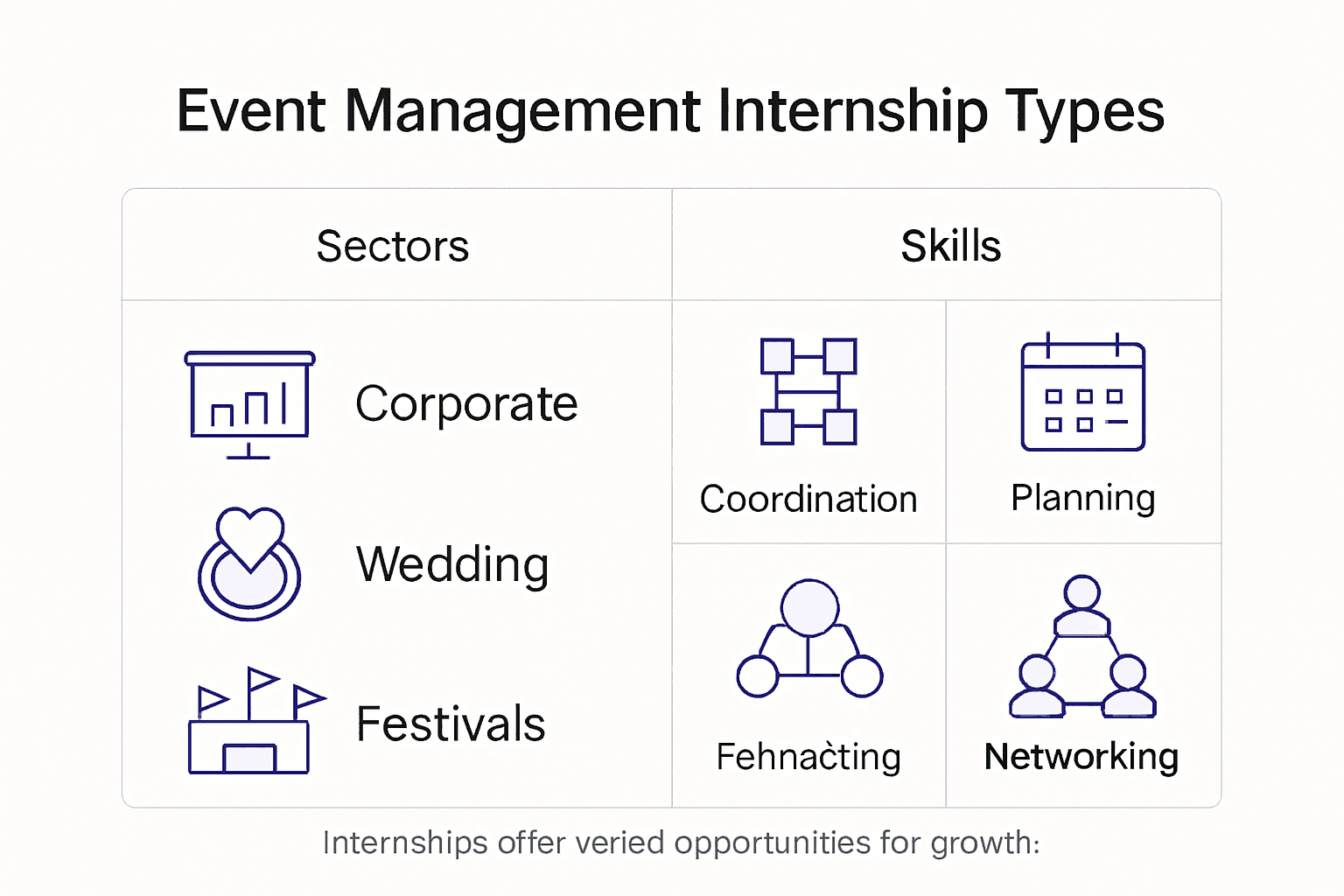
International opportunities further expand the landscape, with placements ranging from local agencies to global event organisations. Some internships specialise in specific areas like sports event management, conference production, or destination event planning. The duration can vary from short-term summer programmes to comprehensive year-long placements, each offering different levels of responsibility and professional exposure.
Here is a summary comparing key event management internship sectors:
| Sector | Typical Responsibilities | Required Skills | Career Pathways |
|---|---|---|---|
| Corporate Events | Conference planning, meetings | Organisation, client liaison | Corporate planner, producer |
| Weddings & Social | Design, client consultation | Creativity, attention to detail | Wedding coordinator, consultant |
| Cultural & Festivals | Crowd control, sponsorship | Programme development, risk management | Festival director, cultural manager |
| Sports Events | Tournament logistics, marketing | Teamwork, fast problem-solving | Sports event manager, promoter |
Pro Tip: Strategic Internship Selection: Research and target internships that align closely with your specific career aspirations, focusing on sectors and organisations that match your long-term professional goals and provide the most comprehensive skill development opportunities.
Essential Skills And Real-World Learning Outcomes
Event management internships offer transformative learning experiences that go far beyond traditional classroom instruction. Authentic event management tasks cultivate critical professional skills through immersive, high-stakes environments where students develop real-world competencies essential for career success. These practical experiences enable interns to transform theoretical knowledge into tangible professional capabilities.
The core skills developed during event management internships encompass a comprehensive range of professional competencies. Communication emerges as a fundamental skill, with interns learning to coordinate complex stakeholder interactions, manage client expectations, and articulate ideas precisely under pressure. Time management becomes crucial, as students learn to juggle multiple priorities, meet stringent deadlines, and maintain organisational efficiency in fast-paced event production environments. Technical skills such as budget management, logistical coordination, and risk analysis are systematically refined through hands-on project experiences.
Professional networking represents another significant learning outcome, with internships providing unprecedented opportunities to build industry connections and understand organisational dynamics. Interns gain exposure to professional protocols, develop collaborative teamwork skills, and learn to navigate complex interpersonal relationships within professional settings. The ability to solve problems creatively, adapt to unexpected challenges, and demonstrate leadership under pressure becomes a hallmark of successful event management professionals emerging from high-quality internship programmes.
Here is a quick-reference guide to essential skills gained through event management internships:
| Skill | Business Impact | Example Application |
|---|---|---|
| Communication | Builds stakeholder trust | Negotiating with vendors |
| Time Management | Ensures deadlines are met | Scheduling event milestones |
| Technical Skills | Reduces operational risks | Managing budgets |
| Networking | Supports career progression | Connecting with industry leaders |
Pro Tip: Strategic Skill Documentation: Maintain a detailed portfolio or journal documenting specific skills learned, challenges overcome, and professional achievements during your internship, which can serve as powerful evidence of your capabilities during future job applications.
Employability Benefits And Career Advancement
Event management internships serve as powerful catalysts for professional transformation, offering unprecedented opportunities for career development and employability enhancement. Systematic reviews confirm that internship participation significantly impacts career outcomes, providing students with critical industry insights and practical skills highly valued by employers worldwide. These experiences bridge the critical gap between academic learning and professional expectations, positioning interns as competitive candidates in the dynamic event management landscape.

The employability benefits of event management internships extend far beyond traditional learning paradigms. Interns develop a robust professional toolkit that includes advanced communication skills, strategic problem-solving capabilities, and nuanced understanding of industry dynamics. Employers consistently seek professionals who demonstrate practical experience, adaptability, and real-world competence. Internships provide a structured environment where students can showcase their potential, build professional networks, and gain exposure to complex organisational challenges that cannot be replicated in classroom settings.
Career advancement opportunities emerge directly from the connections and experiences gained during internships. Many organisations view internships as extended job interviews, with high-performing interns often receiving full-time employment offers or strong recommendations. The professional relationships developed during these programmes can become pivotal career accelerators, offering mentorship, insider industry knowledge, and potential pathways to advanced roles. Moreover, the practical skills acquired during internships enable students to differentiate themselves in a competitive job market, demonstrating tangible value to potential employers.
Pro Tip: Strategic Networking: Actively cultivate relationships during your internship by maintaining professional communication with colleagues, supervisors, and industry contacts, transforming temporary placements into long-term career opportunities.
Common Missteps And How To Avoid Them
Event management internships present unique challenges that can derail professional development if not carefully navigated. Common mistakes for event management interns often stem from inexperience, lack of preparation, and insufficient understanding of professional expectations. Recognising these potential pitfalls is the first critical step towards creating a successful internship experience that sets the foundation for a robust career.
Communication and planning emerge as fundamental areas where interns frequently encounter difficulties. Inadequate team communication can lead to misunderstandings, missed deadlines, and compromised event outcomes. Interns must proactively establish clear communication channels, ask clarifying questions, and demonstrate a willingness to collaborate effectively. Similarly, comprehensive event planning requires meticulous attention to detail, anticipation of potential challenges, and development of robust contingency strategies. Successful interns distinguish themselves by their ability to think strategically, remain adaptable, and approach complex logistical challenges with systematic problem-solving techniques.
Networking represents another critical area where inexperienced interns often fall short. Many students treat internships as mere academic requirements, failing to recognise the profound professional opportunities embedded in these experiences. Building meaningful relationships with supervisors, colleagues, and industry professionals requires genuine engagement, professional curiosity, and a proactive approach to relationship development. Interns should view every interaction as a potential career opportunity, demonstrating reliability, enthusiasm, and a genuine commitment to learning and professional growth.
Pro Tip: Proactive Learning Strategy: Document your internship experiences, challenges overcome, and skills developed in a professional journal, creating a tangible record of your growth and achievements that can be leveraged in future job applications.
Launch Your Event Management Career with Confidence
The article highlights the crucial challenge many aspiring event professionals face: gaining meaningful, hands-on internship experience that truly prepares them for the dynamic demands of event management. From developing essential skills like communication and time management to navigating complex event sectors such as corporate and cultural events, the need for immersive, industry-relevant training is clear. Without practical exposure, many interns struggle to transform theoretical knowledge into real-world competence or build valuable professional networks.
At team.i.org, we understand these hurdles and have dedicated 23 years to shaping future leaders in the event industry. Our specialised certification programmes offer tailored training across social, wedding, sports, and corporate event management, combined with authentic hands-on projects and internships. We collaborate with top industry partners like DNA Entertainment Networks to ensure our students not only learn but also gain real event participation and job placement opportunities. Take a decisive step to overcome common internship pitfalls and accelerate your professional growth with our expert guidance.
Are you ready to transform your passion into a thriving career? Discover how our comprehensive courses and practical exposure can equip you to succeed in any event sector by visiting team.i.org. Start building your future today and turn your internship challenges into your greatest career advantages.
Frequently Asked Questions
What is the significance of internships in event management?
Internships in event management are crucial as they provide hands-on experience, bridging the gap between academic learning and real-world application. They allow aspiring professionals to develop essential skills and gain insights into the industry.
What types of internships are available in event management?
Event management internships can be categorised into various sectors including corporate events, weddings, cultural festivals, and sports events. Each type offers unique responsibilities and skill requirements, catering to different interests within the field.
What skills can be gained from an event management internship?
Participants in event management internships develop vital skills such as communication, time management, problem-solving, and technical abilities related to logistics and budgeting, all of which are crucial for a successful career in the industry.
How can internships enhance employability for event management professionals?
Internships significantly enhance employability by providing practical experience and professional networking opportunities. They allow interns to showcase their capabilities to potential employers, making them more attractive candidates for future job opportunities.
Recommended
- Event Management Internships in 2025: Your Guide to Success – team I
- 7 Essential Tips for Networking Events for Young Professionals – team I
- How Shikha Escaped 9-5 Desk Job & Started her Event Management Career in 4 Months – team I
- Types of Corporate Events: Essential Guide for 2025 – team I
- 7 Effective Networking Strategies for Entrepreneurs