

Most advice about building future leaders ignores a simple truth: adolescence is when the foundation is truly set. British research reveals that leadership skills are not just for a chosen few—they are largely developed during the teenage years. As the need for confident, empathetic leaders grows worldwide, understanding how young people can unlock their full potential matters more than ever. Here you will discover what defines genuine youth leadership growth and why the earliest investments yield lifelong impact.
Table of Contents
- Defining Leadership Development For Young People
- Types Of Youth Leadership Programmes And Models
- Essential Leadership Skills And Qualities
- Pathways For Practical Skill Application
- Common Barriers And How To Overcome Them
Key Takeaways
| Point | Details |
|---|---|
| Leadership Development is Essential | Adolescence is a critical period for cultivating leadership skills, highlighting the need for strategic educational interventions. |
| Emotional Intelligence is Key | Developing emotional intelligence is vital for effective leadership, enabling better team collaboration and conflict resolution. |
| Practical Application Matters | Engaging in diverse leadership experiences outside the classroom is crucial for translating theoretical skills into practice. |
| Overcoming Barriers is Important | Young leaders must address challenges like imposter syndrome and seek mentorship to build confidence and capabilities. |
Defining Leadership Development for Young People
Leadership development for young people represents a strategic process of nurturing critical skills, mindsets, and capacities that enable adolescents to become effective future leaders. Research from the University of Edinburgh highlights adolescence as a pivotal period for cultivating leadership potential, suggesting that leadership capabilities are substantially learnable during secondary school years.
The core of youth leadership development involves more than traditional hierarchical management concepts. It encompasses developing emotional intelligence, communication skills, self-awareness, and interpersonal capabilities that help young individuals navigate complex social environments. These skills are not simply inherited but can be systematically developed through targeted educational interventions, mentorship programmes, and experiential learning opportunities.
Key dimensions of leadership development for youth include:
- Developing self-confidence and personal agency
- Understanding collaborative team dynamics
- Learning ethical decision-making processes
- Building resilience and adaptability
- Cultivating empathy and social awareness
Pro Leadership Insight: Start small but think big. Young aspiring leaders should seek incremental opportunities to practice leadership skills in school clubs, community projects, or student councils, gradually building their confidence and competence in guiding and inspiring others.
Types of Youth Leadership Programmes and Models
Youth leadership programmes represent diverse approaches to developing leadership potential in young individuals, with each model offering unique strategies for skill development and personal growth. The Young Global Leadership Program (YGLP) exemplifies an international model that focuses on developing leadership capabilities across different regional contexts, emphasising a comprehensive approach to understanding leadership through cognitive research and critical thinking frameworks.

One prominent model in contemporary youth leadership development is Youth-led Participatory Action Research (YPAR), which fundamentally transforms traditional leadership training by positioning young people as active researchers and change agents. This innovative approach empowers youth to lead research processes, define critical questions, collect and analyse data, and use their findings to drive meaningful change within their communities and educational institutions.
Primary types of youth leadership programmes include:
- School-based leadership clubs
- Community service leadership initiatives
- Mentorship and coaching programmes
- International exchange leadership experiences
- Research-driven leadership development models
- Skill-based workshops and training sessions
These programmes typically incorporate multiple developmental strategies:
- Experiential learning opportunities
- Structured skill-building workshops
- Reflective practice sessions
- Peer collaboration and networking
- Real-world project implementations
Pro Leadership Insight: Choose wisely. Young aspiring leaders should select leadership programmes that not only teach skills but also provide practical opportunities for application, ensuring a holistic and transformative learning experience.
Here is a comparison of popular youth leadership programme models and their primary benefits:
| Programme Model | Approach Focus | Distinct Advantage |
|---|---|---|
| School-based clubs | Experiential, peer-led | Accessible, supports early practice |
| Mentorship programmes | Guidance, personal feedback | Fosters individual growth |
| International exchange | Cross-cultural collaboration | Develops global perspective |
| Research-led (e.g., YPAR) | Inquiry, social change | Empowers youth as change agents |
| Skill-based workshops | Targeted skill building | Rapidly develops specific abilities |
Essential Leadership Skills and Qualities
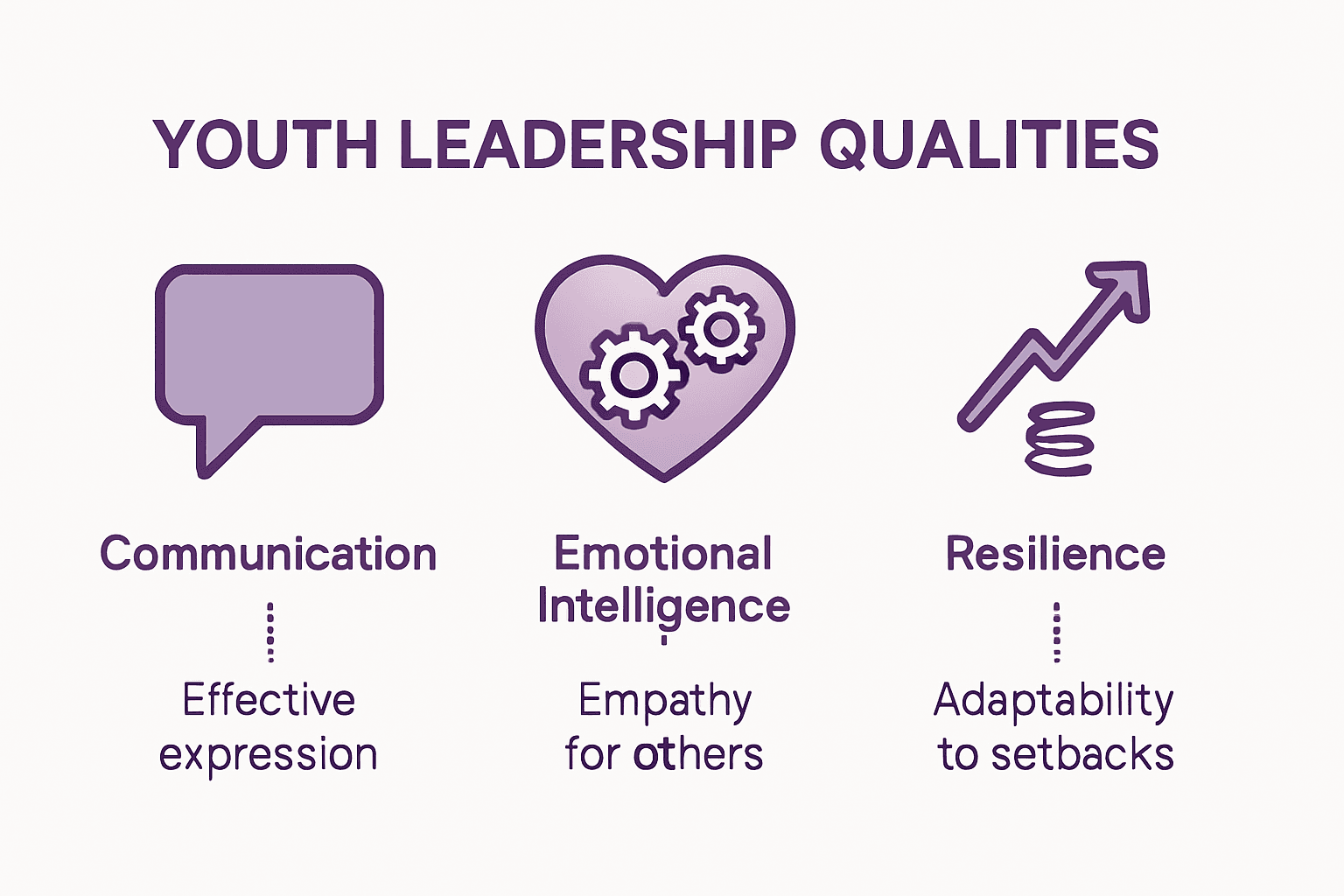
Emotional intelligence stands at the core of exceptional leadership, representing a sophisticated set of interpersonal and intrapersonal capabilities that distinguish truly transformative leaders. Recent academic research underscores the critical role of emotional intelligence in building cohesive teams, resolving conflicts, and motivating individuals through nuanced understanding of human dynamics.
Leadership qualities extend far beyond traditional management skills, encompassing a holistic approach that integrates personal awareness, strategic thinking, and empathetic communication. Key essential skills include:
- Self-awareness: Understanding personal strengths, limitations, and emotional triggers
- Adaptability: Responding effectively to changing environments and challenges
- Communication: Articulating vision clearly and inspiring others
- Empathy: Genuinely understanding and connecting with team members
- Resilience: Maintaining composure and direction during challenging situations
Development of these skills requires deliberate practice and a commitment to continuous personal growth. Young leaders must cultivate:
- Regular self-reflection
- Active listening techniques
- Constructive feedback mechanisms
- Diverse interpersonal experiences
- Ongoing learning and skill development
Pro Leadership Insight: Embrace vulnerability. Effective leaders recognise that showing genuine human qualities, including admitting limitations and seeking continuous improvement, builds stronger, more authentic connections with their teams.
This table summarises the relationship between essential leadership qualities and the typical outcomes for young leaders:
| Leadership Quality | Key Outcome | How It Benefits Young Leaders |
|---|---|---|
| Emotional intelligence | Builds collaborative teams | Enables trust and effective communication |
| Adaptability | Navigates emerging challenges | Prepares for uncertainty and change |
| Empathy | Fosters genuine connections | Encourages motivation and team cohesion |
| Resilience | Sustains progress under pressure | Maintains direction despite setbacks |
Pathways for Practical Skill Application
Practical leadership skill development requires intentional engagement across diverse platforms that provide meaningful learning experiences. Sports-based youth development (SBYD) exemplifies an innovative approach to cultivating leadership capabilities through structured, experiential learning environments that extend beyond traditional classroom settings.
Structured application pathways enable young leaders to transform theoretical knowledge into tangible leadership competencies. Positive Youth Justice frameworks highlight the importance of creating supportive environments that encourage active skill implementation, focusing on constructive engagement and personal growth opportunities.
Key practical pathways for leadership skill application include:
- Student government and representative roles
- Volunteer community service initiatives
- Peer mentorship programmes
- Extracurricular club leadership positions
- Social entrepreneurship projects
- Team sports and collaborative athletic experiences
Implementation strategies for skill development involve:
- Setting clear personal leadership goals
- Seeking diverse leadership experiences
- Reflecting on performance and learning from challenges
- Building a supportive network of mentors and peers
- Continuously challenging personal comfort zones
Pro Leadership Insight: Practice deliberately. Young leaders should actively seek opportunities that push their boundaries, understanding that leadership skills are refined through consistent, intentional practice and reflection.
Common Barriers and How to Overcome Them
Research into leadership development reveals significant challenges young leaders encounter when constructing their leadership identity, highlighting the complex psychological and social barriers that impede leadership growth. Understanding these obstacles is crucial for developing targeted strategies to support emerging leaders in their personal and professional development.
The most prevalent leadership barriers young individuals face include:
- Imposter syndrome: Persistent self-doubt and fear of being exposed as incompetent
- Limited confidence: Hesitation in taking initiative or making decisive actions
- Lack of mentorship: Insufficient guidance and strategic support systems
- Fear of failure: Paralysing anxiety about potential mistakes or public rejection
- Skill gaps: Recognising personal limitations without clear pathways for improvement
Strategies for overcoming these barriers require a multifaceted approach:
- Develop a growth mindset
- Seek constructive feedback
- Build a supportive peer network
- Invest in continuous learning
- Practice self-compassion and resilience
Pro Leadership Insight: Embrace vulnerability. Young leaders should view challenges as opportunities for growth, understanding that self-doubt is a natural part of the leadership journey and not a permanent limitation.
Unlock Your Leadership Potential Through Practical Event Management Training
The article highlights how developing essential leadership skills like emotional intelligence, resilience and adaptability during youth is crucial for future success. If you are a young individual aiming to overcome barriers such as limited confidence or imposter syndrome while gaining practical leadership experience, consider bridging these gaps through specialised programmes. Our platform offers comprehensive certification courses in event management that integrate hands-on projects, internships and real event participation to sharpen your communication, teamwork and decision-making abilities in real-world scenarios.
Embark on your leadership journey with team.i.org, a trusted institute with 23 years of industry expertise and strong partnerships like DNA Entertainment Networks. Whether you want to lead sports, corporate or social events, our flexible online and hybrid courses are designed to build your self-confidence and resilience through experiential learning and mentorship.
Take charge of your future today by exploring our detailed course offerings and discover how you can transform your leadership skills with proven strategies from the field. Don t wait to practise deliberately and unlock your potential. Reach out now via https://www.wa.me/919901998899/ to start your transformative leadership development journey.
Frequently Asked Questions
What are the key skills developed in youth leadership programmes?
Youth leadership programmes focus on developing emotional intelligence, communication skills, self-awareness, adaptability, empathy, and resilience, equipping young individuals for effective leadership.
How can young people start developing their leadership skills?
Young people can begin developing their leadership skills by participating in school clubs, volunteer initiatives, and mentorship programmes, as well as seeking opportunities for real-world project implementations.
What is Youth-led Participatory Action Research (YPAR) and its significance?
YPAR is an innovative approach that involves young individuals in leading research processes to drive meaningful community change, empowering them to become active change agents rather than passive learners.
What challenges do young leaders face in their development?
Young leaders often encounter barriers such as imposter syndrome, limited confidence, lack of mentorship, fear of failure, and skill gaps, which can hinder their growth and leadership identity.
Recommended
- Top Event Management Skills for Success in 2025 – team I
- Top Event Management Workshops 2025: Courses for Career Growth – team I
- Sports Event Management: Essential Skills, Jobs, and Certifications 2025 – team I
- Event Management and Public Relations: Skills and Success in 2025 – team I
- Understanding Creating Safe Learning Environments – Mats4U