

Career paths in Indian event management often stall when you lack specialised skills or up-to-date training. The demand for qualified planners keeps rising as weddings, corporate events, and entertainment festivals expand across major cities. An online event planning degree builds both theoretical knowledge and practical expertise, offering a flexible way to advance while working. Industry partnerships and hands-on experience gained during these programmes prepare you for immediate job placement and lasting professional growth.
Table of Contents
- What An Online Event Planning Degree Offers
- Specialisations Within Online Event Programmes
- Essential Skills And Industry Partnerships
- Practical Training, Internships, And Job Placement
- Navigating Costs, Admissions, And Career Outcomes
Key Takeaways
| Point | Details |
|---|---|
| Comprehensive Curriculum | Online event planning degrees provide practical skills in event management, covering aspects from client coordination to budgeting and analytics. |
| Specialisation Opportunities | Students can focus on niches such as weddings, corporate events, or sustainable practices, enhancing their expertise and market demand. |
| Industry Partnerships | Programmes with strong industry connections offer real-world experience, increasing employability through internships and networking. |
| Positive Career Outcomes | Graduates often secure employment within three months, with clear pathways for salary progression based on experience and expertise. |
What an Online Event Planning Degree Offers
An online event planning degree transforms you from enthusiast to strategist. You’re not just learning theory—you’re gaining practical skills that Indian event organisers desperately need right now.
The curriculum covers five core pillars that shape modern event professionals.
Event Planning Foundations
You’ll start by understanding your role as an event planner. This isn’t abstract stuff. You learn how to manage client expectations, handle vendor negotiations, and build relationships that sustain your career. Many programmes include vendor and client coordination training alongside financial management basics.
Marketing and Promotion Skills
Events don’t fill themselves. You’ll learn to create campaigns, manage social media presence, and leverage digital platforms—essential for Indian markets where Instagram and YouTube drive attendance. Modern event planners must understand brand positioning and audience targeting.
Event Design and Themes
From corporate conferences to weddings, you’ll master different event styles and themes. Advanced curricula emphasise emerging industry trends and specialised courses that keep you competitive in global markets.
Business and Analytics Foundation
You learn budgeting, ROI calculation, and data analysis. This separates amateurs from professionals. Understanding profit margins, cost control, and financial reporting matters when you’re managing events worth lakhs of rupees.
Key Benefits of Online Study
- Study at your own pace without abandoning your current job
- Access to industry-standard software and planning tools
- Real-world case studies from Indian and international events
- Networking with peers across multiple Indian cities
- Flexibility to work on actual events while learning
Why This Matters in India
The Indian event industry grows at 15 percent annually. Weddings, corporate gatherings, sports tournaments, and entertainment events require trained professionals. An online degree positions you to capture this opportunity whilst developing your existing skills.
Online event planning degrees combine theoretical knowledge with practical project work, allowing professionals to remain employed whilst upskilling for advancement.
Pro tip: Look for programmes offering real event participation rather than just case studies—hands-on experience executing actual weddings, conferences, or exhibitions in Indian cities gives you genuine portfolio pieces employers recognise.
Specialisations Within Online Event Programmes
Online event programmes offer specialisations that let you focus on the exact event types you’re passionate about. Rather than studying everything equally, you concentrate on your niche—whether that’s weddings in Delhi, corporate conferences in Bangalore, or sports events across India.
Most programmes allow you to choose specialisation tracks based on your career goals and interests.
Wedding and Social Events
This specialisation covers the Indian wedding market specifically. You learn about traditional ceremonies, multi-day celebrations, vendor management across regions, and budgeting for events worth crores. Cultural sensitivity and understanding regional preferences become your competitive advantage in this lucrative sector.
Corporate and Business Events
Companies need professionals who understand conferences, product launches, annual meetings, and team-building experiences. You’ll study event research, design, coordination, and promotion strategies alongside risk management for large-scale gatherings. Financial precision matters here more than anywhere else.

Sports and Entertainment Events
India’s sports industry explodes during cricket seasons, marathons, and entertainment festivals. This track teaches you crowd management, sponsorship activation, and ticketing systems. You’ll understand how to handle thousands of attendees safely.
Sustainable and Inclusive Events
Modern clients demand environmentally responsible events. This specialisation covers sustainable practices, inclusive audience engagement, and digital innovation in event design. Green credentials now matter when competing for premium clients.
To help you understand each specialisation’s real-world focus, here is a comparison of online event planning specialisations in India:
| Specialisation | Core Focus | Career Impact |
|---|---|---|
| Weddings & Social | Cultural traditions, budgeting | High demand in metros, lucrative fees |
| Corporate & Business | Conference management, promotion | Career stability, large-scale events |
| Sports & Entertainment | Crowd control, sponsorship | Seasonal peaks, brand partnerships |
| Sustainable & Inclusive | Eco-friendly, digital innovation | Alignment with premium clients |
Key Specialisation Areas
- Wedding and celebration management
- Corporate conference coordination
- Sports event organisation
- Entertainment and festival production
- Sustainable event practices
- Digital and hybrid event management
- International destination events
Why Specialisations Matter
Choosing a specialisation deepens your expertise rather than spreading you thin. Clients hire specialists, not generalists. When you tell a couple you’ve managed 50 weddings specifically, they trust you more than someone claiming general event experience.
Specialised expertise positions you as an authority in your chosen sector, justifying premium fees and attracting repeat business.
Pro tip: Select a specialisation aligned with India’s growing market sectors—wedding events, corporate conferences, and sports management currently face the biggest talent shortages, making these the most profitable niches for early-career professionals.
Essential Skills and Industry Partnerships
You cannot build a career on theory alone. Online event programmes succeed when they combine skill development with direct connections to working professionals and established companies. This is what separates average courses from industry-ready qualifications.
The Skills You Actually Need
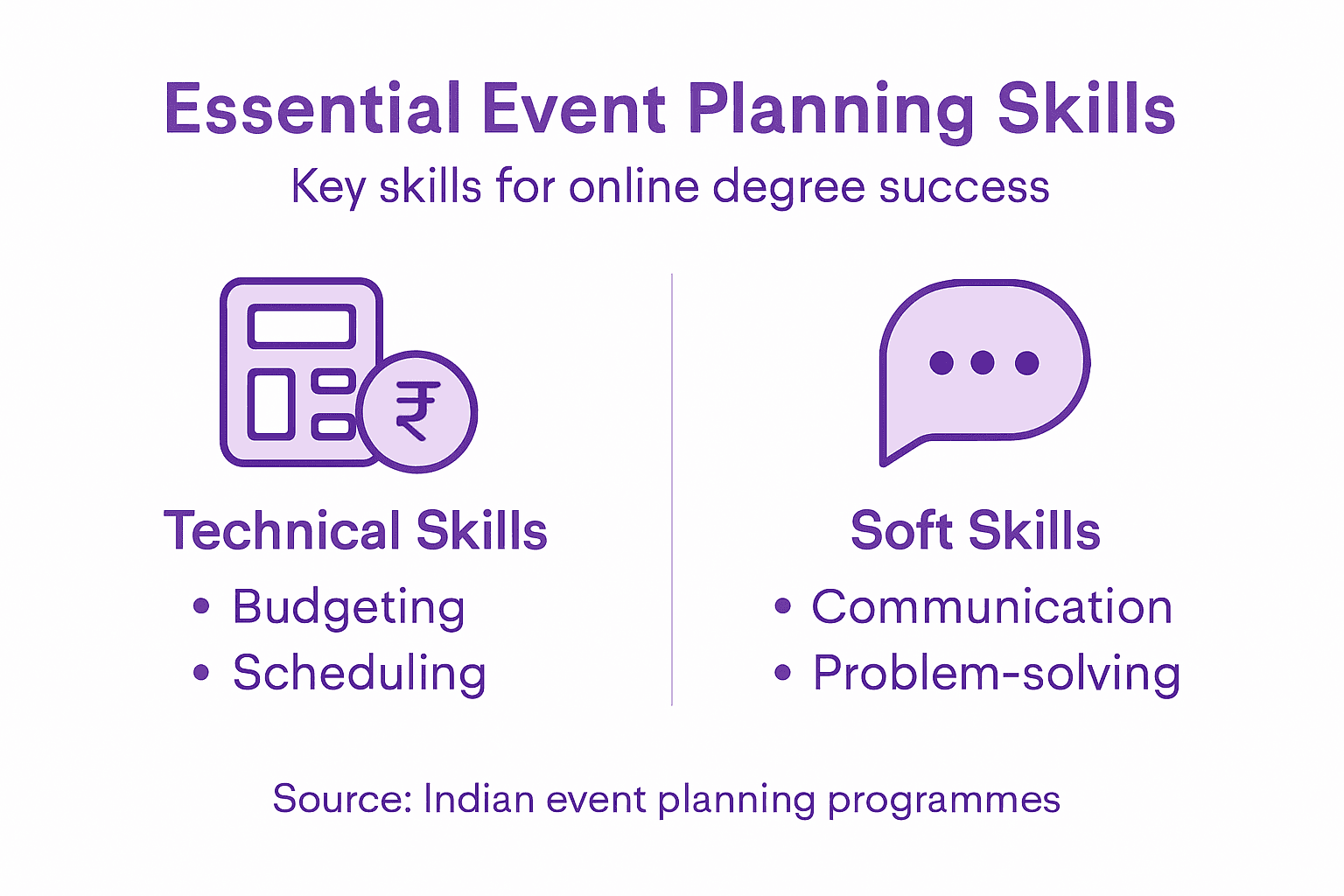
Event planning demands both technical and interpersonal expertise. Soft skills such as communication, problem-solving, and cultural awareness separate competent planners from exceptional ones. You’ll also develop hard skills in budgeting, vendor coordination, and marketing systems.
Technical Skills
You learn industry-standard software for event management, ticketing platforms, and project management tools. Understanding spreadsheets, timeline management, and data analysis matters when handling budgets worth lakhs. These aren’t optional—they’re baseline.
Soft Skills Development
Communication wins clients. Problem-solving prevents disasters. Cultural awareness ensures respect across India’s diverse event landscape. These skills transform you from someone who executes plans into someone who creates solutions under pressure.
Why Industry Partnerships Matter
When your school partners with actual event companies, you don’t just read case studies—you work on real projects. You see how professionals handle vendor disputes, manage timelines, and navigate client expectations. This experience counts more than any classroom discussion.
Real-World Benefits
- Access to mentorship from practising event professionals
- Participation in actual events throughout your course
- Portfolio pieces clients recognise immediately
- Job placement opportunities before graduation
- Networking with industry decision-makers
- Understanding of current market trends
How Partnerships Strengthen Curricula
Companies tell educational institutions what skills they actually need. This feedback ensures programmes teach relevant content rather than outdated practices. Industry professionals occasionally lecture, bringing current case studies into classrooms. When academia and industry collaborate effectively, graduates arrive job-ready rather than requiring months of additional training.
Programmes with strong industry partnerships produce graduates who begin contributing meaningfully on day one, reducing employer onboarding time significantly.
Pro tip: Before enrolling, ask prospective programmes which companies they partner with and request details of actual projects previous students participated in—this reveals whether partnerships are genuine or purely promotional.
Practical Training, Internships, and Job Placement
Your degree means nothing without hands-on experience. Online programmes that include internships and real event participation teach you what classrooms cannot. This is where theory becomes instinct and confidence grows.
Why Internships Matter
Internships bridge the gap between studying and working. You apply academic knowledge in real-world settings, discovering what event planning actually feels like under pressure. Internships provide crucial experiential learning and professional networking opportunities, often determining your career trajectory before graduation.
Real Event Participation
Top programmes don’t just discuss events—they assign students to actual weddings, conferences, and festivals. You manage vendor checklists, troubleshoot last-minute changes, and see how professionals handle chaos. This transforms you from observer to participant in genuine industry scenarios.
Building Your Portfolio
Every event you work on becomes a portfolio piece. When you tell prospective clients you’ve coordinated 15 weddings or managed logistics for corporate conferences, they believe you. Documentation through photos, feedback, and testimonials from real clients matters more than academic assignments.
Job Placement Support
Reputable programmes actively place graduates. They maintain relationships with event companies, wedding planners, and corporate event departments across India. Some guarantee placement assistance within three to six months of graduation, a significant advantage in competitive markets.
The Placement Advantage
- Direct introductions to hiring managers
- Job board access with curated opportunities
- Alumni networks in major Indian cities
- Ongoing career support after graduation
- Interview preparation and feedback
- Salary negotiation guidance
Building Professional Networks
You meet industry professionals during internships and training. These connections often become your first employers, collaborators, or referral sources. The relationships you build matter more than the grades you earn.
From Student to Professional
Internships accelerate your transition into paid roles. Many organisations hire their best interns full-time after graduation. You’ve already proven yourself, understand their systems, and need minimal training.
Programmes combining internships with job placement support see 87 percent of graduates employed within three months of completing their qualifications.
Pro tip: During internships, volunteer for the messiest projects—vendor disputes, last-minute logistics, problem-solving tasks—because these experiences teach more than smooth event execution and become compelling stories during job interviews.
Navigating Costs, Admissions, and Career Outcomes
Money matters. Your investment in an online event management degree should yield genuine returns through career advancement and earning potential. Understanding costs, admission requirements, and realistic salary expectations helps you make informed decisions.
Understanding Programme Costs
Event management courses in India range from INR 40,000 to INR 5,00,000 depending on institution and programme duration. Online programmes tend toward the lower end because they eliminate campus infrastructure costs. Diploma programmes cost less than degree qualifications, whilst postgraduate certifications sit between the two.
Payment Options and Scholarships
Reputable institutions offer flexible payment plans, allowing you to spread costs across the programme duration. Many provide scholarships based on merit or financial need. Some programmes offer discounts for early enrolment or referrals. Ask about these before committing.
Admission Requirements
Most online programmes require only secondary education completion and basic computer literacy. Some postgraduate programmes expect prior work experience or relevant qualifications. Entrance exams are uncommon for online programmes—merit-based selection is typical. Application processes are straightforward and completed entirely online.
Return on Investment
Graduates entering the event management field earn between INR 2.5 to 3.5 LPA initially. Experienced professionals manage budgets worth lakhs, commanding significantly higher salaries. Wedding coordinators in metropolitan areas often earn INR 4 to 6 LPA within three years.
Career Progression Timeline
Below is a summary of typical career advancement for online event management graduates in India:
| Career Stage | Role Example | Estimated Annual Salary (INR) |
|---|---|---|
| Year 1 | Event Assistant | 2.5–3 lakh |
| Year 2–3 | Event Coordinator | 3.5–4.5 lakh |
| Year 4–5 | Event Manager | 5–7 lakh |
| Year 6+ | Senior/Business Owner | 8 lakh and above |
- Year 1: Assistant roles earning INR 2.5 to 3 LPA
- Year 2-3: Coordinator positions at INR 3.5 to 4.5 LPA
- Year 4-5: Manager roles earning INR 5 to 7 LPA
- Year 6+: Senior management or independent business ownership
Evaluating Programme Value
Lower costs don’t guarantee quality. Assess whether programmes include internships, job placement support, and industry partnerships. The cheapest option often means minimal practical training. A slightly more expensive programme with strong placement records offers better value.
Career Outcomes Beyond Salary
Event management offers flexibility—you can freelance, start your own business, or work for established companies. Many professionals transition into wedding planning, corporate event management, or entertainment production. The sector grows faster than traditional industries, creating abundant opportunities.
Graduates from programmes with verified job placement support report 87 percent employment within three months, significantly higher than industry averages.
Pro tip: Before enrolling, request detailed employment data from recent graduates—ask specifically about roles secured, salaries negotiated, and how long the job search took—as these metrics reveal whether a programme truly delivers promised career outcomes.
Elevate Your Event Planning Career With Expert Training
The article highlights a key challenge faced by aspiring event planners in India — transforming passion into professional expertise through practical skills and industry connections. If you are aiming to specialise in wedding, corporate, or sports event management while gaining hands-on experience you need trusted guidance and real-world exposure that bridges theoretical knowledge with actual project management. Understanding concepts like client coordination, budgeting, and marketing is essential yet tackling these in live environments is where true confidence is built.
At teami.org, we have crafted specialised online and hybrid programmes combining 23 years of industry wisdom with strong partnerships such as DNA Entertainment Networks. Our courses focus on delivering immersive internships and projects to help you master skills like vendor management and event promotion within India’s fast-growing market. Explore detailed course structures and career insights in our Career in Event Management section and deepen your Event Literacy to stay ahead of trends.
Take control of your professional future now by visiting our platform to discover how you can gain the practical training, industry mentorship and placement support needed to thrive in India’s booming event sector. Start your journey today with teami.org and transform your event planning passion into a successful, sustainable career.
Frequently Asked Questions
What are the core subjects covered in an online event planning degree?
The curriculum typically includes event planning foundations, marketing and promotion skills, event design and themes, business and analytics foundations, and practical training through real-world case studies.
How does specialisation in event planning enhance career opportunities?
Specialisation allows you to focus on specific event types, such as weddings or corporate events, which establishes your expertise and makes you more attractive to potential clients seeking targeted skills.
What skills are essential for a successful career in event planning?
Key skills include communication, problem-solving, budgeting, vendor coordination, and cultural awareness. Technical skills, such as proficiency in event management software, are also crucial.
How do internships during an online event planning degree impact career prospects?
Internships provide practical experience and networking opportunities, allowing students to apply their knowledge in real-world settings. They often lead to job placements, making graduates more competitive in the job market.