

Many aspiring event planners believe a natural flair for organising gatherings is enough to build a successful career. In reality, India’s event industry demands specialised training, recognised certifications, and hands-on experience to stand out professionally. Professional development encompasses formal education, verified credentials, and practical exposure that transform your passion into a sustainable, rewarding career. This guide clarifies the pathways to build your skills strategically and advance confidently in India’s competitive event sector.
Table of Contents
- Why Professional Development Matters In Event Planning
- Core Components Of Professional Development For Event Planners In India
- Comparing Course And Certification Options For Event Planners In India
- Building A Career Advancement Plan Through Professional Development
- Advance Your Career With Specialised Event Management Training
- Frequently Asked Questions
Key takeaways
| Point | Details |
|---|---|
| Professional development combines education, certification, and experience | Structured learning paired with practical work creates competitive event professionals ready for industry demands. |
| Formal qualifications increasingly vital in India’s market | Certification and diploma courses significantly boost placement chances and career prospects. |
| Networking and industry awareness underpin success | Building connections and staying informed about trends positions you for opportunities and mentorship. |
| Specialised certifications differentiate candidates | Focused credentials in areas like corporate or wedding events make you stand out to employers. |
| Ongoing learning tracks evolving expectations | Continuous skill updates ensure you remain relevant as client needs and event formats change. |
Why professional development matters in event planning
India’s event industry has transformed dramatically over recent years. What once relied on informal networks and apprenticeships now demands structured training and verified credentials. Employers and clients increasingly expect event planners to demonstrate certified competencies, not just passion and enthusiasm. Formal training and certification significantly increase placement chances in India’s event industry, with diploma holders reporting 40% higher employment rates compared to uncertified peers.
Professional development raises your credibility instantly. When you present recognised qualifications, clients trust your ability to manage budgets, coordinate vendors, and execute flawless events. This trust translates directly into better job opportunities and higher earning potential. Certified professionals often command premium rates because their credentials assure clients of quality and reliability.
Branching into different event types requires ongoing training. Corporate conferences demand different skills than wedding planning or sports tournaments. Each specialisation has unique logistics, vendor networks, and client expectations. Without targeted education, you risk making costly mistakes that damage your reputation. Event management courses provide the knowledge base to navigate these diverse requirements confidently.
Practical experience alongside formal education completes your readiness. Theory teaches concepts; real-world exposure teaches problem-solving under pressure. The combination creates professionals who can adapt quickly, manage crises calmly, and deliver exceptional results consistently. Understanding the importance of certification in event management helps you appreciate why credentials matter alongside hands-on practice.
Pro Tip: Start documenting every event you coordinate, even small volunteer projects. This portfolio becomes invaluable evidence of your practical skills when seeking employment or clients.
“Professional development isn’t optional anymore. It’s the foundation that separates hobbyists from serious professionals who build lasting careers.”
Key benefits of structured professional development:
- Enhanced employability through verified credentials
- Access to specialised knowledge unavailable through self-study
- Industry recognition that opens networking doors
- Higher earning potential from premium positioning
- Confidence to tackle complex, high-value events
Core components of professional development for event planners in India
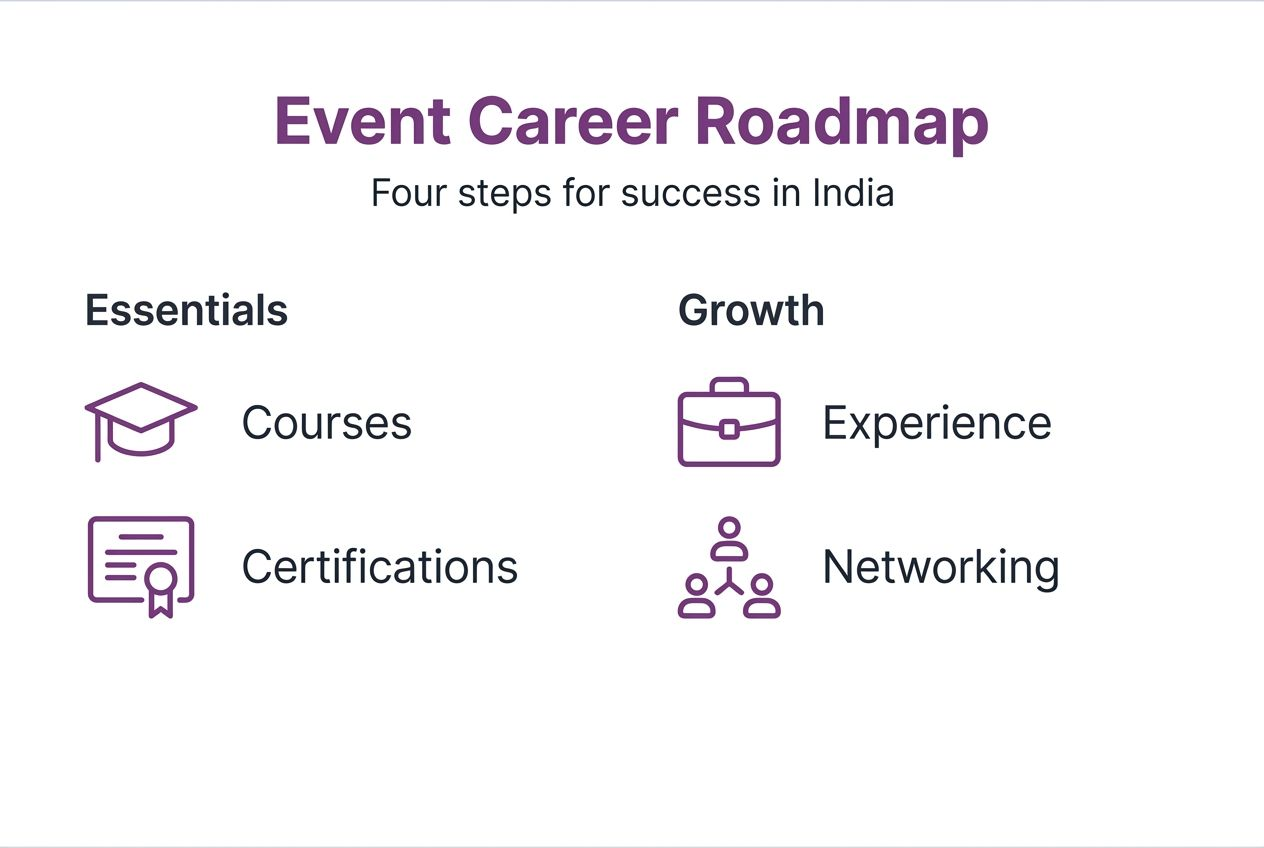
Building a successful event planning career requires four interconnected elements working together. Each component strengthens your professional profile differently, but their combination creates a compelling package that employers and clients value highly.
Specialised event management courses teach core competencies systematically. You learn budget management, vendor negotiation, risk assessment, timeline planning, and client communication through structured curricula. These courses cover both universal principles and India-specific considerations like cultural sensitivities, regional vendor networks, and local regulations. Various certifications and diploma courses cater to different skill levels and specialisations within event management in India.
Certification demonstrates verified skills and professional commitment. Unlike informal learning, certification requires passing assessments that prove competency. This validation matters enormously when competing for positions or pitching to clients. Employers can quickly verify your credentials, making hiring decisions faster and more confident. Understanding certification vs diploma event careers helps you choose the right qualification pathway.
Industry work experience provides practical exposure you cannot gain from textbooks. Managing real budgets, negotiating with actual vendors, and solving live problems builds capabilities that theory alone never could. Events management work experience transforms academic knowledge into practical wisdom. Internships, assistant roles, and volunteer positions all contribute valuable learning.

Networking skills are critical to career advancement and securing industry connections. Building relationships with vendors, venues, other planners, and potential clients creates opportunities that never appear on job boards. Your professional network becomes your most valuable asset over time. Attending industry events, joining professional associations, and maintaining relationships systematically expands your reach. Developing strong networking skills for event careers accelerates your professional growth significantly.
Pro Tip: Create a simple spreadsheet tracking everyone you meet professionally. Note where you met, their expertise, and any follow-up actions. This system ensures you nurture relationships systematically rather than letting valuable contacts fade.
Follow these steps to build your professional foundation:
- Assess your current skill level honestly and identify knowledge gaps
- Research course options that address your specific needs and budget
- Enrol in a recognised certification or diploma programme
- Seek practical experience through internships or entry-level positions
- Join at least two professional networks or associations
- Attend industry events quarterly to stay connected and informed
| Component | Primary Benefit | Time Investment | Career Impact |
|---|---|---|---|
| Specialised courses | Systematic knowledge building | 3-12 months | Foundational credibility |
| Certification | Verified competency proof | 1-6 months | Enhanced employability |
| Work experience | Practical skill development | Ongoing | Real-world capability |
| Networking | Opportunity access | Ongoing | Long-term career growth |
Comparing course and certification options for event planners in India
Choosing the right educational pathway requires understanding how different programmes serve distinct needs and career stages. Your decision should align with your current situation, learning preferences, budget constraints, and professional goals.
Diploma courses offer comprehensive training with higher placement rates. These programmes typically span six to twelve months, covering extensive curriculum from event conceptualisation through post-event analysis. Diploma holders report 40% higher placements compared to certificate-only candidates. Diplomas signal serious commitment and provide thorough preparation for professional roles.
Certification programs focus on validating specific skills or knowledge areas. Shorter and more targeted than diplomas, certifications suit working professionals seeking to add credentials without career breaks. They demonstrate competency in particular event types or technical skills. Many professionals combine multiple certifications to build a diverse credential portfolio.
Online and in-person courses both offer flexibility but cater to different learning preferences and career needs. Online programmes allow you to study whilst maintaining employment, ideal for career changers or those with family commitments. In-person courses provide direct networking opportunities and hands-on practice that some learners value highly. Your learning style and circumstances should guide this choice.
Cost and duration vary significantly between programme types. Diplomas generally require larger investments but provide comprehensive preparation. Certifications cost less but may require stacking multiple credentials to achieve comparable breadth. Event planning certification costs range from affordable online options to premium comprehensive programmes. Balance your budget against your career timeline and goals.
Pro Tip: If budget constrains you, start with a targeted certification in your preferred specialisation. Once employed in the field, many employers support further education through fee reimbursement or flexible scheduling.
| Programme Type | Duration | Cost Range | Best For | Key Advantage |
|---|---|---|---|---|
| Diploma course | 6-12 months | ₹50,000-₹2,00,000 | Career starters | Comprehensive preparation, highest placement rates |
| Professional certification | 1-6 months | ₹15,000-₹75,000 | Skill validation | Targeted expertise, employer recognition |
| Online course | 3-9 months | ₹20,000-₹1,00,000 | Working professionals | Study flexibility, location independence |
| Workshop series | 2-4 months | ₹10,000-₹40,000 | Specific skill gaps | Focused learning, networking opportunities |
Choosing a programme depends on career goals, budget, and learning style. Career starters benefit most from comprehensive diplomas that provide broad foundations and strong placement support. Mid-career professionals often prefer certifications that add credentials without employment interruption. Those in remote locations or with inflexible schedules find online event management courses ideal for maintaining momentum whilst managing other commitments.
Building a career advancement plan through professional development
Transforming professional development aspirations into reality requires a structured plan that integrates education, experience, and networking systematically. Without clear steps, good intentions fade into delayed action and missed opportunities.
Assess your current skills and career goals to identify gaps. List every event-related skill you possess honestly, then compare against job descriptions for your target positions. The differences reveal exactly where you need development. This assessment prevents wasting time and money on training that doesn’t advance your specific career path.
Select relevant courses and certifications aligned with desired specialisations. If corporate events interest you most, prioritise programmes emphasising conference management, sponsor relations, and business etiquette. Wedding planners need different training than sports event coordinators. Understanding specialisations in event management helps you focus your development efforts strategically.
Gain practical work experience through internships or entry-level roles. Theory provides knowledge; practice builds competence. Even unpaid internships offer invaluable exposure to real budgets, actual vendors, and genuine crises. Many employers convert strong interns into permanent staff. Events management work experience accelerates your learning curve dramatically compared to study alone.
Develop networking routines to build industry contacts systematically. Attend at least one industry event monthly, whether conferences, workshops, or informal meetups. Follow up within 48 hours with every valuable contact. Share useful articles or introductions that add value to your network. Understanding networking skills importance transforms relationship-building from awkward obligation into strategic advantage.
Regularly update your skills to stay aligned with evolving event trends. Integrating continuous learning with strategic networking maximises career growth opportunities in India’s dynamic event sector. Technology changes, client expectations shift, and new event formats emerge constantly. Professionals who learn continuously remain valuable whilst others become obsolete.
Create your personalised advancement plan:
- Document your current skills, experience, and credentials objectively
- Research three target positions that represent your career goal
- List the specific gaps between your current state and those positions
- Select one course or certification that addresses your biggest gap
- Identify two networking groups or associations to join this month
- Schedule quarterly reviews to assess progress and adjust your plan
Essential elements of ongoing professional development:
- Monthly learning activities through courses, workshops, or industry publications
- Quarterly networking events to build and maintain industry relationships
- Annual certification renewals or new credential additions
- Regular portfolio updates documenting completed events and achievements
- Consistent mentor consultations for guidance and accountability
Advance your career with specialised event management training
Team I offers comprehensive courses suited for various career stages in India’s event industry. Whether you’re just starting or looking to specialise further, their programmes combine academic rigour with practical application through 23 years of industry expertise. Flexible online event management courses accommodate working professionals who need to balance study with employment commitments. Their certified event resource training programmes enhance employability through industry-recognised credentials. With direct connections to DNA Entertainment Networks, students gain access to real event opportunities, industry mentors, and networking events that transform learning into career advancement. Explore event management courses designed specifically for the Indian market’s unique requirements and opportunities.
Frequently asked questions
How can certification help my event planning career?
Certification validates your skills and increases your credibility with clients and employers in India’s competitive market. It demonstrates you’ve met industry standards and possess verified competencies that uncertified competitors cannot prove. Many employers require or strongly prefer certified candidates when hiring, particularly for senior positions or corporate events. Certification also supports higher salary negotiations by providing objective evidence of your professional capabilities. Recognised credentials open doors to opportunities that remain closed to talented but uncertified planners.
What certifications are most recognised in India’s event industry?
Look for certifications from established institutes with strong industry connections and placement records. Programmes affiliated with professional associations or major event companies carry more weight than standalone credentials. Top event management certification courses typically include comprehensive curricula covering multiple event types and practical components. Research which credentials your target employers value most before investing time and money.
What practical experience is needed to excel in event planning?
Experience coordinating events under supervision is vital to skill-building and career readiness. You need exposure to budget management, vendor negotiations, timeline coordination, and crisis resolution in real situations. Practical exposure through internships or work placements provides essential real-world skills that theory cannot teach. Start with volunteer events or assistant roles, then progress to managing components before taking full event responsibility. Even small events build capabilities that transfer to larger, more complex projects.
How can I stay updated with event industry trends in India?
Join professional groups and attend conferences regularly to remain connected with evolving practices. Subscribe to relevant publications and online resources that cover industry developments, technology innovations, and client expectation shifts. Continuously following industry updates and trends supports ongoing professional relevance in a rapidly changing sector. Engage with industry mentors and peers regularly through networking events and online communities. Follow leading event companies and planners on social media to observe their innovations and client interactions. Set aside time monthly to read industry reports and case studies that reveal emerging patterns and opportunities.
Are online event management courses effective for career growth?
Online event management courses offer flexibility and access to up-to-date knowledge without requiring location changes or career interruption. They are ideal for balancing work and study commitments whilst building recognised credentials. Online programmes ensure accessibility regardless of location, bringing quality education to smaller cities and towns. However, practical experience should complement online learning for full career readiness. Seek internships, volunteer opportunities, or entry-level positions to apply your online learning in real situations. The combination of flexible online education and hands-on practice creates well-rounded professionals ready for industry demands.
Recommended
- Event & Project Management India 2026: Boost Careers 40% – team I
- How to choose an event management career in India 2026 – team I
- Event planning jobs: find the best certification in India 2026 – team I
- Event Planning Degree Online: Boosting Careers in India – team I
- 7 Essential Event Management Tips 2025 for Luxury Planners – Winelands Function – For Every Occasion, Your Celebration