

The Indian event management industry is experiencing explosive growth, projected to reach $5.5 billion by 2028, yet many aspiring professionals remain uncertain about how to enter this lucrative field. Whether you’re drawn to glittering weddings, high-stakes corporate launches, or thrilling sports events, understanding the training pathways, essential skills, and networking strategies can transform confusion into career clarity. This guide demystifies the journey from aspiring event manager to industry professional, covering education options, specialisations, and emerging trends shaping opportunities in 2026.
Table of Contents
- Overview Of Event Management Industry And Career Prospects In India
- Essential Skills And Education Pathways For Aspiring Event Managers
- Importance Of Networking, Internships, And Industry Connections
- Navigating Specialisations And Future Trends In Event Management
- Explore Expert Event Management Courses And Certifications
- Frequently Asked Questions About Event Management Careers In India
Key takeaways
| Point | Details |
|---|---|
| Industry growth accelerating | Indian event market growing from $3.5 billion in 2023 to projected $5.5 billion by 2028, creating thousands of new career opportunities. |
| Specialised training matters | Formal education like BBA programmes and industry certifications significantly enhance employability and career advancement prospects. |
| Networking drives success | Building professional relationships through internships, industry events, and mentors directly impacts job opportunities and long-term growth. |
| Digital skills essential | Virtual event platforms, AI tools, and tech-driven operations are transforming the industry, requiring event managers to master digital competencies. |
| Multiple specialisation paths | Career options span weddings, corporate events, sports, entertainment, and virtual events, each requiring distinct skill sets. |
Overview of event management industry and career prospects in India
The Indian event management landscape has transformed dramatically over the past decade. The Indian event market estimated at $3.5 billion in 2023 demonstrates remarkable momentum, whilst separate projections suggest the Indian event and exhibition market expected to reach $8.44 billion by 2030. This growth isn’t merely numerical, it represents thousands of emerging career pathways across diverse event categories.
Weddings dominate India’s event economy, hosting approximately 10 million celebrations annually and generating substantial revenue through venue bookings, catering, décor, and entertainment services. Sports events, from cricket tournaments to marathons, command increasing budgets and require sophisticated logistics management. Live entertainment, including concerts, festivals, and cultural programmes, continues expanding as disposable incomes rise and audiences seek experiential engagement.
The overview of Indian event management industry reveals how diverse revenue streams create specialised career niches. Corporate events, product launches, conferences, and exhibitions demand professionals skilled in stakeholder management and brand positioning. Meanwhile, virtual and hybrid events have carved permanent space in the industry post-pandemic, requiring digital expertise alongside traditional event skills.
| Event Segment | Estimated Annual Revenue Contribution | Key Growth Drivers |
|---|---|---|
| Weddings | 40-45% | Cultural significance, rising budgets, destination celebrations |
| Corporate Events | 25-30% | Business expansion, product launches, team building |
| Sports Events | 15-20% | Cricket dominance, emerging sports, fitness culture |
| Live Entertainment | 10-15% | Concert tourism, music festivals, cultural programmes |
| Virtual/Hybrid | 5-10% | Technology adoption, global reach, cost efficiency |
Career opportunities span every segment, from entry-level coordinator roles to senior positions managing multi-crore budgets. Event planners, logistics managers, sponsorship executives, and technical directors all find employment across agencies, corporate houses, hotels, and independent consultancies. The industry’s diversity means professionals can pivot between segments or specialise deeply in one domain.
Essential skills and education pathways for aspiring event managers
Entering event management requires a strategic blend of formal education and practical competencies. The three-year BBA in Event Management has emerged as the foundational degree, with annually 15,000–20,000 students pursuing BBA in Event Management across Indian institutions. These programmes combine business principles with event-specific modules covering planning, budgeting, marketing, and operations management.
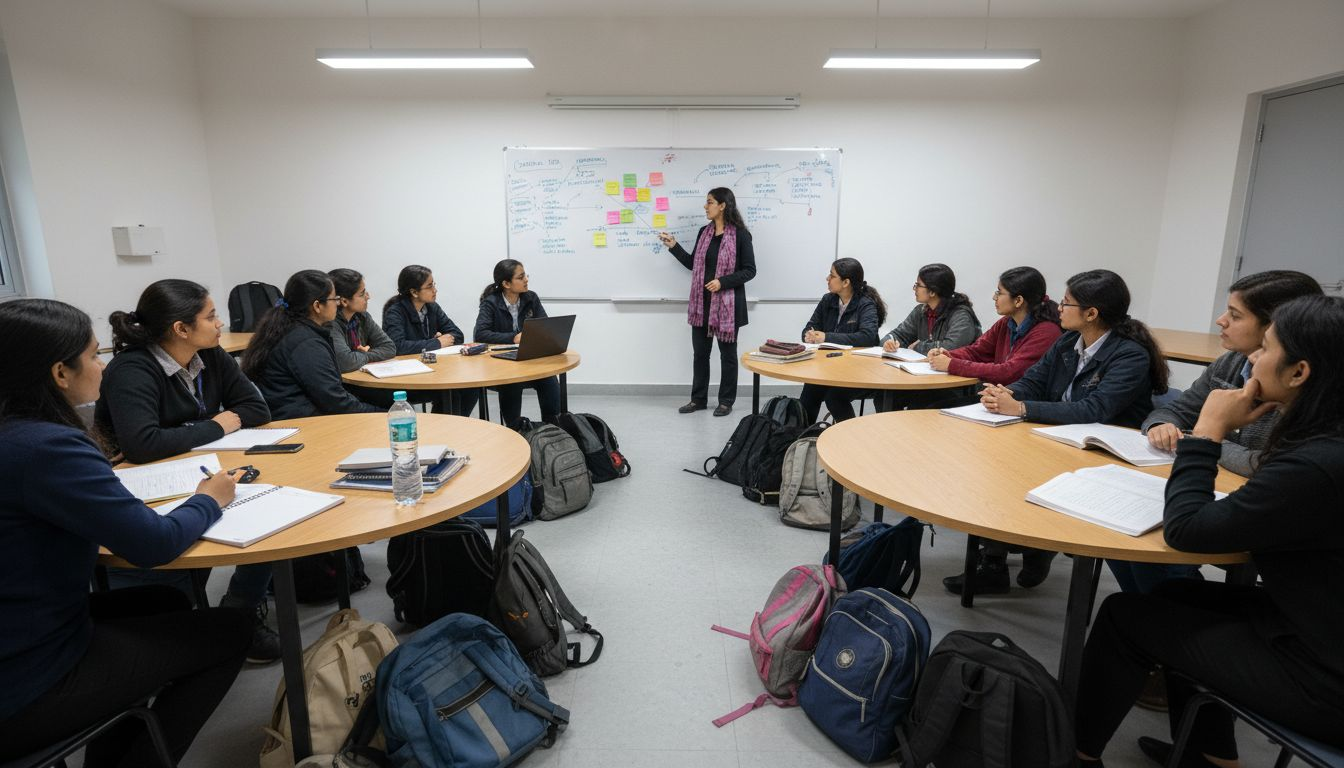
Core competencies distinguish successful event managers from generalists. Planning and organisational skills form the foundation, enabling professionals to coordinate multiple moving parts simultaneously whilst maintaining attention to detail. Communication abilities, both written and verbal, prove essential when liaising with clients, vendors, sponsors, and attendees. Financial acumen helps managers control budgets, negotiate contracts, and maximise profitability without compromising quality.
Risk assessment and crisis management separate amateur coordinators from true professionals. Events involve countless variables, from weather disruptions to vendor failures, requiring managers to anticipate problems and implement contingency plans. Digital event technology has become non-negotiable, with platforms for registration, virtual attendance, audience engagement, and data analytics now standard tools. Pro tip: Focus on risk management and contingency planning from your earliest projects, as crisis-handling skills demonstrate maturity and earn client trust rapidly.
Certifications enhance credibility and open doors to specialised roles. Industry-recognised credentials signal commitment to professional development and mastery of specific domains. The event management course essentials demonstrate how structured learning accelerates skill acquisition compared to learning solely through trial and error.
Key skills aspiring event managers must develop:
- Vendor management and negotiation to secure quality services within budget constraints
- Creative problem-solving for designing unique experiences that exceed client expectations
- Time management to handle multiple projects simultaneously without missing deadlines
- Marketing and social media expertise to promote events and engage target audiences
- Team leadership to motivate diverse crews including volunteers, staff, and contractors
- Cultural sensitivity to design inclusive events respecting diverse traditions and preferences
Networking and internships provide the experiential bridge between classroom learning and professional practice. Understanding networking skills for event careers and recognising the importance of internships for event students transforms theoretical knowledge into practical capability. Early exposure to real events, even in supporting roles, builds confidence and reveals how textbook concepts apply under actual pressure.
Importance of networking, internships, and industry connections
Professional relationships often determine career trajectories in event management more decisively than qualifications alone. Professionals with strong industry networks have a higher chance of securing internships and jobs, reflecting how trust and reputation drive hiring decisions in this relationship-intensive industry. Clients frequently engage event managers based on referrals and demonstrated track records rather than anonymous credentials.
Effective networking in event management requires deliberate strategy:
- Attend industry conferences and trade shows where event professionals, vendors, and potential clients congregate, actively introducing yourself and exchanging contact information rather than passively observing.
- Join professional associations and online communities focused on event management, participating in discussions, sharing insights, and volunteering for committee roles to increase visibility.
- Connect with alumni and mentors from your educational institution who can provide guidance, introduce you to opportunities, and share lessons from their career journeys.
- Volunteer at major events to gain hands-on experience whilst building relationships with organisers, vendors, and fellow volunteers who may become future collaborators.
- Maintain an active social media presence showcasing your event projects, industry insights, and professional development, positioning yourself as an engaged community member.
Internships provide irreplaceable practical learning that classrooms cannot replicate. Working alongside experienced professionals reveals the rhythm of event execution, from initial client briefs through post-event evaluation. Interns observe how seasoned managers handle vendor conflicts, manage last-minute changes, and maintain composure during crises. These experiences build confidence and competence simultaneously.
Industry-connected event institutes offer distinct advantages through established relationships with event agencies, corporate clients, and venue partners. Such connections translate into internship placements, live project opportunities, and potential job offers upon course completion. Students benefit from guest lectures by industry veterans, site visits to major events, and direct exposure to hiring managers.
Pro tip: Attend industry events regularly and collect contact details from at least five new professionals each time, following up within 48 hours with personalised messages referencing your conversation to cement the connection before memory fades.
“The event management industry runs on relationships and reputation. Your network isn’t just about who you know, it’s about who knows your work ethic, creativity, and reliability when challenges arise. Every internship, every volunteer shift, every industry mixer is an audition for your next opportunity.”
The intersection of formal education, practical experience, and professional relationships creates a powerful career foundation. Understanding professional networking for businesses principles helps aspiring event managers approach relationship-building strategically rather than haphazardly, recognising that consistent engagement and genuine value-offering yield better long-term results than transactional interactions.
Navigating specialisations and future trends in event management
Event management encompasses diverse specialisations, each demanding distinct skill sets and offering unique career pathways. Wedding planning requires deep cultural knowledge, vendor coordination expertise, and emotional intelligence to manage family dynamics during high-stress celebrations. Corporate event management emphasises brand alignment, stakeholder management, and business outcome measurement. Sports events demand logistics mastery, safety protocol expertise, and ability to coordinate large volunteer teams.
| Specialisation | Primary Focus | Essential Skills | Typical Career Path |
|---|---|---|---|
| Wedding Management | Cultural traditions, family coordination | Vendor negotiation, décor design, timeline management | Wedding coordinator → Senior planner → Independent consultant |
| Corporate Events | Brand positioning, ROI measurement | Stakeholder management, strategic thinking, analytics | Event coordinator → Corporate event manager → Head of events |
| Sports Events | Logistics, safety, participant experience | Operations planning, volunteer management, emergency response | Operations assistant → Event manager → Tournament director |
| Entertainment | Artist management, audience engagement | Production knowledge, marketing, contract negotiation | Production assistant → Event producer → Festival director |
| Virtual Events | Technology platforms, digital engagement | Digital tools mastery, content creation, analytics | Digital coordinator → Virtual event specialist → Hybrid event strategist |
Digital event platforms and virtual events have grown rapidly since 2020, establishing permanent presence rather than serving as temporary pandemic solutions. Organisations now routinely offer hybrid options, combining in-person experiences with virtual attendance to maximise reach whilst controlling costs. This evolution requires event managers to master streaming technology, engagement tools, and digital marketing alongside traditional event skills.
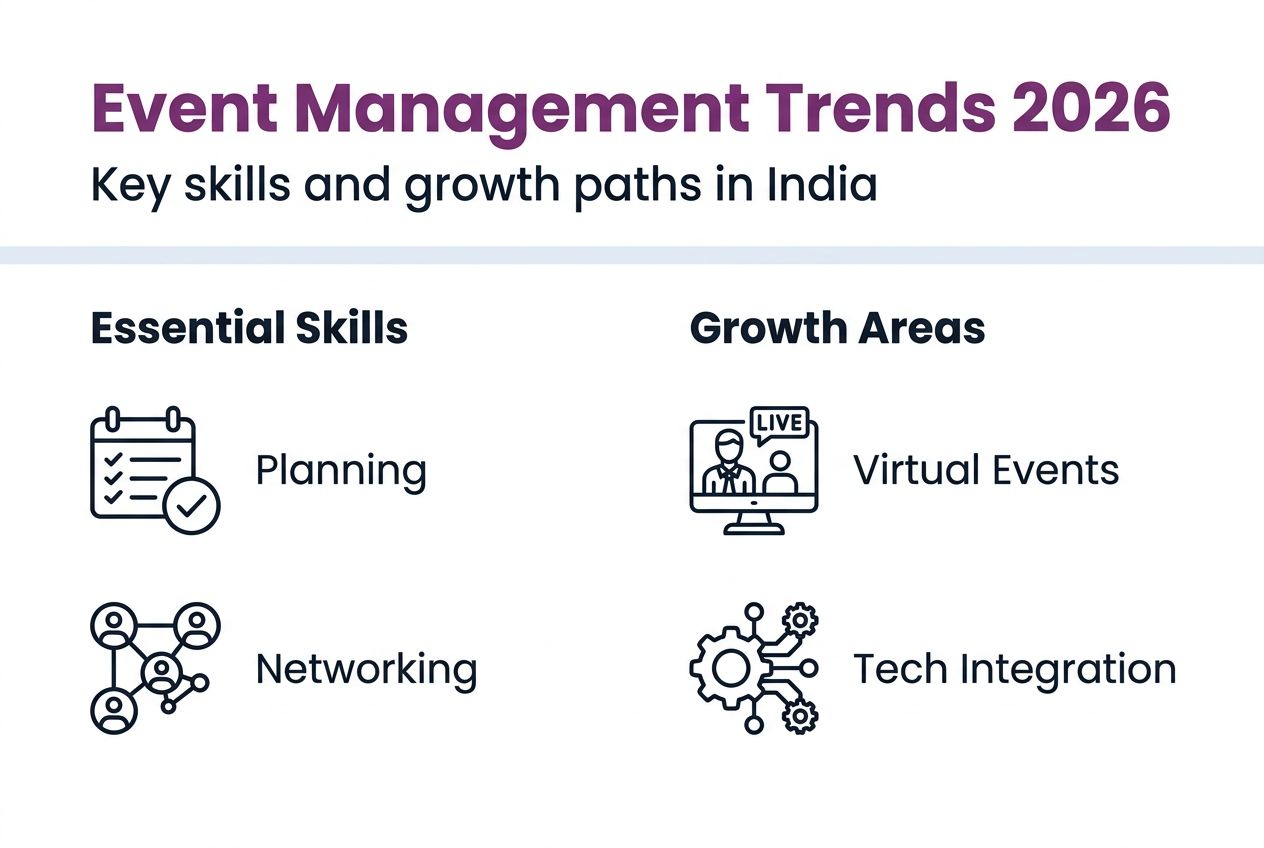
Technology innovations are reshaping event operations fundamentally. The MahaKumbh 2025 used advanced tech including CCTV, RFID wristbands, AI facial recognition demonstrating how large-scale events now deploy sophisticated systems for crowd management, security, and operational efficiency. AI-powered tools analyse attendee behaviour, personalise experiences, and predict logistical requirements. RFID technology enables seamless access control, cashless payments, and real-time attendance tracking.
Understanding event management specialisations helps aspiring professionals identify which domain aligns with their interests and strengths. Some thrive in the emotional intensity of weddings, whilst others prefer the strategic complexity of corporate events or the adrenaline of live entertainment production. Exploring online event management programmes provides flexible pathways for upskilling in specific specialisations without career interruption.
Future-ready skills event managers should cultivate:
- Data analytics and metrics interpretation to measure event success and demonstrate ROI to stakeholders
- Sustainability and green event practices as environmental consciousness influences event design decisions
- Virtual and hybrid event production combining physical and digital experiences seamlessly
- AI and automation tools for registration, personalisation, and operational efficiency
- Cybersecurity awareness to protect attendee data and prevent digital disruptions
- Accessibility and inclusive design ensuring events accommodate diverse abilities and needs
The convergence of technology and traditional event management creates opportunities for professionals who embrace continuous learning. Those who master digital tools whilst maintaining strong interpersonal skills and creative vision will command premium opportunities. The industry rewards adaptability, as emerging trends continuously reshape what audiences expect and what organisers can deliver.
Explore expert event management courses and certifications
Transforming your passion for events into a sustainable career requires strategic investment in quality education and industry-recognised credentials. teami.org offers comprehensive event management course essentials designed to bridge the gap between theoretical knowledge and practical industry readiness. With 23 years of experience and collaboration with DNA Entertainment Networks, the platform provides direct pathways to real event participation, internships, and placement opportunities.
The importance of certification in event management extends beyond credentials, signalling to employers your commitment to professional standards and specialised expertise. Certifications differentiate candidates in competitive hiring situations, often tipping decisions in favour of certified professionals who demonstrate validated competencies. For working professionals seeking career advancement, online event management programmes deliver flexible learning without requiring career breaks.
teami.org’s offerings include:
- Specialised certification programmes in weddings, corporate events, sports, and entertainment management
- Hands-on project exposure through partnerships with active event companies
- Industry mentorship connecting students with experienced professionals
- Placement assistance leveraging established relationships with event agencies and corporate clients
- Flexible online and hybrid learning formats accommodating diverse schedules and locations
Frequently asked questions about event management careers in India
What qualifications do I need to start a career in event management?
Whilst formal qualifications aren’t legally mandatory, a BBA in Event Management or equivalent degree significantly enhances employability and provides structured learning of industry fundamentals. Certifications in specific specialisations like wedding planning or corporate events further strengthen your profile. Many successful event managers combine formal education with internships and volunteer experience to build practical skills alongside theoretical knowledge.
How important are internships in this field?
Internships prove absolutely critical for breaking into event management, as they provide hands-on experience that employers value more than classroom learning alone. Through internships, you build professional networks, learn industry software and processes, and demonstrate your work ethic to potential employers. Many event management students secure their first jobs through connections and impressions made during internship placements.
Which certifications are best recognised in India?
Certifications from established institutes with industry partnerships carry the most weight, particularly those offering practical exposure alongside theoretical content. Look for programmes accredited by recognised bodies and taught by professionals with active industry involvement. Specialised certifications in high-demand areas like destination weddings, corporate conferences, or digital events can differentiate you in competitive job markets.
Can I pursue event management online effectively?
Yes, online event management programmes have become increasingly effective, especially when they incorporate virtual internships, live project participation, and digital portfolio development. However, seek programmes offering practical components rather than purely theoretical courses. The most effective online learning combines self-paced modules with scheduled virtual workshops, mentorship sessions, and opportunities to participate in real events remotely.
What are the future career prospects by 2030?
The Indian event management industry’s projected growth to $8.44 billion by 2030 indicates robust career prospects across all specialisations. Emerging opportunities in hybrid events, experiential marketing, and tech-driven event solutions will create new roles requiring digital skills alongside traditional event expertise. Professionals who embrace continuous learning and adapt to evolving audience expectations will find expanding opportunities at every career level.