

Many aspiring event professionals believe international event management is simply about booking venues and coordinating schedules across time zones. This misconception overlooks the strategic complexity, cross-cultural expertise, and specialised skills required to orchestrate global events successfully. International event management encompasses diplomatic summits, multinational product launches, global conferences, and cultural festivals, each demanding unique competencies. This guide clarifies the true scope of international event management, explores essential education pathways, examines career opportunities, and provides practical insights to help you build a thriving career in this dynamic field.
Table of Contents
- Key takeaways
- Understanding the scope of international event management
- Essential education and certification pathways for international event managers
- Career opportunities and growth within international event management
- Key skills and practical tips for succeeding in international event management
- Explore specialised education to advance your event management career
- Frequently asked questions
Key Takeaways
| Point | Details |
|---|---|
| Scope beyond logistics | International event management requires strategic planning across cultures, time zones, and post event analysis rather than simply coordinating venues. |
| Cultural and regulatory complexity | The role involves navigating cross cultural differences alongside visa requirements, licensing, data protection and other legal frameworks. |
| Education and certification paths | Specialised courses and recognised qualifications help develop practical skills and credibility for international opportunities. |
| Networking and practical experience | Building relationships with local experts and gaining hands on experience are essential for navigating markets and handling unforeseen challenges. |
Understanding the scope of international event management
The scope of international event management as a career reaches far beyond simple logistics coordination. International event managers coordinate diverse, large-scale events requiring cross-cultural competency, handling everything from initial concept development through post-event analysis. You’ll work across multiple time zones, navigate different legal frameworks, and bridge cultural differences to deliver seamless experiences.
International event management encompasses several distinct event categories, each with unique demands. Corporate summits bring together stakeholders from different continents, requiring sophisticated technology integration and multilingual support. Entertainment festivals demand crowd management expertise and local regulatory knowledge. Diplomatic events involve protocol specialists and security coordination at the highest levels. Trade exhibitions require vendor management across international borders and customs coordination.
Your responsibilities as an international event manager extend into strategic territory. You’ll develop event concepts that resonate across cultures whilst respecting local customs and sensitivities. Budget management becomes more complex when dealing with multiple currencies, international payment systems, and varying cost structures. Risk assessment must account for political stability, health regulations, and regional security concerns that domestic planners rarely encounter.
Team coordination presents unique challenges in international settings. You’ll manage multicultural teams where communication styles, work expectations, and decision-making processes differ significantly. Building trust across cultural boundaries requires patience, active listening, and genuine curiosity about different perspectives. Successful international event managers develop cultural intelligence that goes beyond surface-level awareness.
The legal and compliance landscape adds another layer of complexity:
- Visa and work permit requirements for international staff and performers
- Local licensing regulations for venues, alcohol service, and public gatherings
- Data protection laws that vary significantly between jurisdictions
- Insurance requirements covering international liability and risk exposure
- Contractual frameworks that accommodate different legal systems
Pro Tip: Build relationships with local experts in your target markets who understand regional nuances and can navigate bureaucratic processes efficiently. These partnerships prove invaluable when unexpected challenges arise.
Essential education and certification pathways for international event managers
Specialised event management courses and certifications enhance career potential and credibility by providing structured learning and industry-recognised qualifications. Formal education programmes equip you with theoretical foundations whilst practical components develop hands-on competencies. The right educational pathway accelerates your career progression and opens doors to international opportunities that might otherwise remain closed.
Diploma programmes typically span six to twelve months and cover comprehensive event management principles. You’ll study venue selection, budget management, marketing strategies, and risk assessment through case studies drawn from real international events. These programmes often include project-based learning where you plan mock events, developing portfolios that demonstrate your capabilities to potential employers.
Certification programmes offer focused training in specific aspects of international event management. Professional certifications validate your expertise and signal commitment to industry standards. Many employers specifically seek candidates with recognised certifications when filling international roles. Certification in event management demonstrates you’ve mastered core competencies and stay current with evolving industry practices.
Key competencies developed through formal education include:
- Strategic event planning and concept development
- Financial management including budgeting, forecasting, and cost control
- Stakeholder communication and relationship management
- Technology integration for registration, engagement, and analytics
- Crisis management and contingency planning
- Sustainability practices and responsible event management
Online learning platforms have transformed access to quality event management course information, allowing you to study whilst maintaining current employment. Hybrid programmes combine online theoretical instruction with in-person practical workshops, offering flexibility without sacrificing hands-on experience. These formats suit working professionals seeking to transition into international event management.
Industry partnerships distinguish exceptional education programmes from generic offerings. Institutes collaborating with established event companies provide students with internship opportunities, mentorship from experienced professionals, and exposure to live events. These connections often translate directly into employment opportunities upon programme completion.
Pro Tip: Prioritise programmes offering practical exposure through internships or live event participation rather than purely theoretical courses. Real-world experience builds confidence and provides concrete examples for job interviews.
Specialisation options allow you to focus on event categories aligned with your interests and career goals. Corporate event specialisation develops skills in conference management, product launches, and business networking events. Entertainment specialisation covers festivals, concerts, and cultural celebrations. Wedding and social event specialisation addresses the unique demands of milestone celebrations across different cultures.
Career opportunities and growth within international event management
The international event management career landscape offers diverse roles with clear advancement pathways for ambitious professionals. International event management careers offer diverse roles from logistics to strategic planning with strong growth potential, allowing you to find positions matching your strengths and interests. Understanding these roles helps you chart a realistic career trajectory and identify skills requiring development.
Entry-level positions typically begin with event coordinator roles where you support senior managers in executing established plans. You’ll handle vendor communications, manage registration systems, coordinate logistics, and ensure smooth on-site operations. These positions provide foundational experience whilst building your professional network.
Mid-level roles involve greater autonomy and strategic input. Event managers oversee entire projects from conception through completion, managing budgets, leading teams, and interfacing directly with clients. International liaison specialists focus specifically on cross-border coordination, managing relationships with overseas vendors, navigating cultural differences, and ensuring compliance with local regulations.

| Role | Primary responsibilities | Required experience | Typical salary range |
|---|---|---|---|
| Event coordinator | Logistics support, vendor liaison, registration management | 0-2 years | ₹3-5 lakhs annually |
| Event manager | Full event oversight, budget management, team leadership | 2-5 years | ₹6-12 lakhs annually |
| International liaison | Cross-border coordination, cultural mediation, compliance | 3-6 years | ₹8-15 lakhs annually |
| Senior event strategist | Concept development, client acquisition, P&L responsibility | 6+ years | ₹15-30 lakhs annually |
Senior positions reward accumulated expertise with strategic responsibilities and higher compensation. Event directors oversee multiple simultaneous projects, develop business strategy, and mentor junior staff. Consultancy roles allow experienced professionals to work independently, advising organisations on event strategy whilst maintaining flexible schedules.
Building a successful international event management career requires deliberate steps:
- Complete specialised education and obtain relevant certifications to establish credibility
- Gain practical experience through internships, volunteer positions, or entry-level roles
- Develop a portfolio showcasing successful events you’ve contributed to or managed
- Build an international network by attending industry conferences and joining professional associations
- Seek opportunities to work on progressively larger and more complex events
- Specialise in a particular event category or geographic region to become a recognised expert
- Continuously update skills through ongoing education and staying current with industry trends
Networking accelerates career advancement significantly in the event management industry. Relationships with vendors, venues, and fellow professionals lead to referrals, partnership opportunities, and insider knowledge about upcoming positions. International experience, even short-term assignments, demonstrates adaptability and cultural competence that employers value highly.
Career growth isn’t always linear. Some professionals move laterally into related fields like destination marketing, hospitality management, or corporate communications before returning to event management with broader perspectives. Others transition from corporate events to entrepreneurship, launching their own event management companies.
Key skills and practical tips for succeeding in international event management
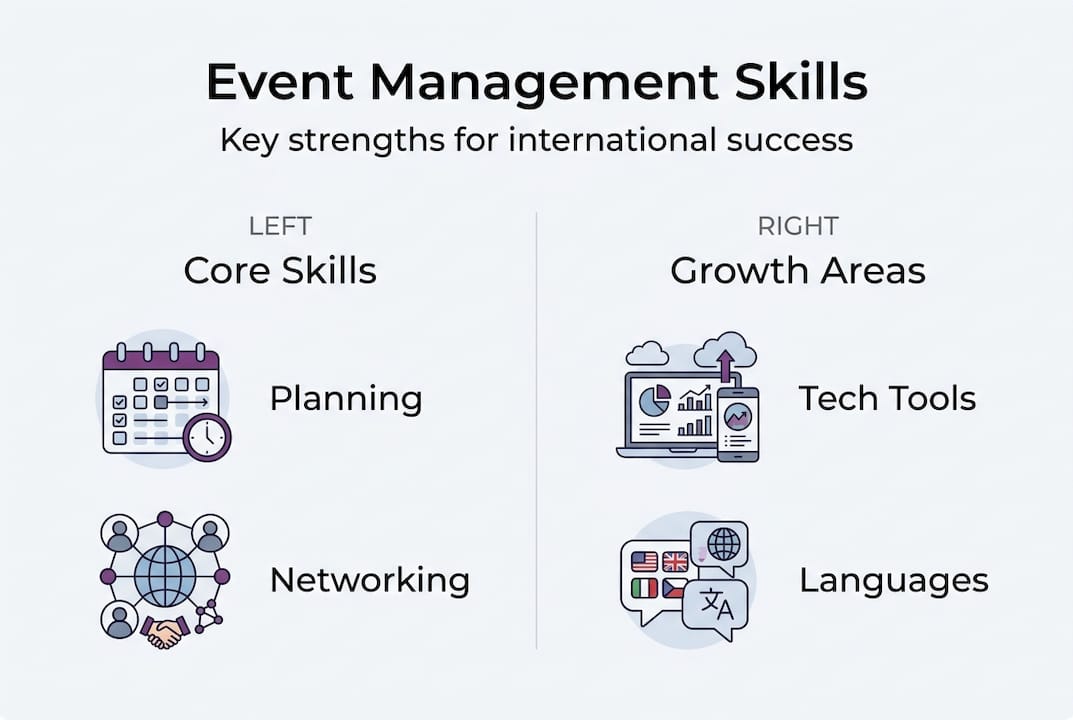
Success in international event management demands a specific skill set extending beyond organisational abilities. Cross-cultural communication forms the foundation of effective international work. You must recognise that directness, hierarchy, time orientation, and decision-making styles vary dramatically across cultures. Effective communication, cultural sensitivity, and technology use are critical for event managers operating internationally, separating competent coordinators from exceptional leaders.
Negotiation skills become crucial when working across borders where expectations, contractual norms, and business practices differ. You’ll negotiate with venues operating under different pricing structures, vendors with varying service standards, and clients with diverse expectations. Successful negotiators focus on mutual benefit rather than zero-sum outcomes, building long-term relationships that survive individual transactions.
Digital proficiency separates modern event managers from those struggling to keep pace. Technology in modern event planning streamlines registration, enhances attendee engagement, and provides valuable analytics. You should master event management platforms, virtual event tools, project management software, and data analysis applications. Technology enables you to manage complex international events efficiently whilst providing real-time visibility to stakeholders.
Crisis management capabilities determine how effectively you handle inevitable unexpected challenges. Flight cancellations, venue emergencies, speaker no-shows, and technical failures test your composure and problem-solving abilities. Develop contingency plans for high-risk scenarios, maintain calm under pressure, and communicate transparently when issues arise. Your reputation depends heavily on how you navigate difficulties.
Essential professional skills include:
- Active listening to understand unstated concerns and cultural nuances
- Adaptability to adjust plans quickly when circumstances change
- Attention to detail ensuring nothing falls through organisational cracks
- Time management to juggle multiple projects across different time zones
- Financial acumen to manage budgets and maximise return on investment
- Leadership abilities to inspire and coordinate diverse teams
Pro Tip: Cultivate strong relationships with vendors and partners in key international markets by respecting their expertise, paying promptly, and acknowledging their contributions publicly. These relationships become invaluable during crises when you need extraordinary support.
Legal and compliance frameworks vary significantly between jurisdictions, requiring careful attention. Research local regulations thoroughly before committing to venues or vendors. Work with legal advisors familiar with international event contracts to protect your interests and your client’s. Understand tax implications, liability issues, and insurance requirements specific to each location.
Continuous learning keeps your skills relevant as the industry evolves. Subscribe to industry publications, attend professional conferences, and participate in webinars covering emerging trends. Follow thought leaders on social media platforms where they share insights and best practices. Consider joining professional associations offering resources, networking opportunities, and ongoing education.
Language skills provide significant competitive advantages in international event management. Whilst English serves as a common business language, speaking your client’s or vendor’s native language builds rapport and demonstrates respect. Even basic proficiency in key languages opens doors and facilitates smoother communication during high-stress situations.
Explore specialised education to advance your event management career
Taking the next step in your international event management career starts with the right educational foundation. Specialised event management courses provide structured learning pathways covering essential competencies whilst offering practical exposure through real-world projects. Whether you’re starting fresh or seeking to enhance existing skills, targeted education accelerates your career progression.
Online event management courses offer flexibility for working professionals, allowing you to build expertise without interrupting your current employment. Certifications demonstrate commitment to professional development and validate your capabilities to potential employers. Programmes emphasising industry partnerships provide networking opportunities and potential pathways to employment upon completion.
If you’re ready to explore how specialised education can transform your career prospects, reach out for personalised guidance on programme options matching your goals and circumstances. The right educational investment today opens doors to exciting international opportunities tomorrow.
Frequently asked questions
What kinds of events fall under international event management?
International event management encompasses corporate conferences, trade exhibitions, entertainment festivals, diplomatic summits, product launches, and cultural celebrations spanning multiple countries. Each event type requires distinct planning approaches, cultural considerations, and logistical frameworks. The unifying factor is coordination across international borders with multicultural stakeholders.
How important is certification for a career in international event management?
Certification significantly enhances your credibility and employability in international markets. Employers often prefer certified candidates because certifications validate core competencies and demonstrate commitment to professional standards. Internationally recognised certifications particularly benefit those seeking roles with global organisations or opportunities abroad.
What are the biggest challenges faced by international event managers?
Cross-cultural communication differences, legal compliance across jurisdictions, time zone coordination, and complex logistics present the most significant challenges. Political instability, currency fluctuations, and varying vendor standards add further complexity. Success requires adaptability, strong problem-solving skills, and extensive preparation including robust contingency planning.
Can I enter international event management without prior experience?
Yes, specialised education programmes, internships, and volunteer opportunities provide pathways into international event management without extensive prior experience. Starting with entry-level coordinator roles allows you to build practical skills whilst developing your professional network. Certifications and formal education accelerate progression by demonstrating foundational knowledge to potential employers.