
The event management industry in India moves at lightning speed, with new technologies, formats, and attendee expectations emerging constantly. For aspiring event managers, staying current isn’t just about professional growth, it’s essential for delivering impactful experiences that resonate with audiences. Without proactive learning and strategic engagement with industry developments, you risk falling behind competitors who adapt quickly. This guide provides evidence-backed strategies tailored for young Indian professionals to consistently track, understand, and apply the latest trends in event management throughout 2026.
Table of Contents
- Understand The Importance Of Continuous Learning And Professional Development
- Leverage Networking And Online Platforms To Discover Emerging Trends Early
- Utilise Data-Driven Insights And Digital Event Technologies For Strategic Advantage
- Monitor Evolving Consumer Preferences And Sustainability For Future-Ready Events
- Explore Professional Training And Certification With Team I
Key takeaways
| Point | Details |
|---|---|
| Pursue continuous education | Professional development through workshops and certifications keeps you ahead of emerging trends and boosts employability. |
| Leverage networking platforms | Industry-specific online communities and expert connections help you discover trends 25% faster than passive learning. |
| Adopt data-driven tools | Analytics and hybrid event technologies improve ROI by up to 45% and expand your strategic capabilities. |
| Monitor consumer preferences | Understanding evolving attendee expectations and sustainability practices ensures your events remain relevant and competitive. |
| Build broad foundations first | Develop core skills across multiple event types before specialising to maximise career flexibility. |
Understand the importance of continuous learning and professional development
Continuous professional development (CPD) represents the ongoing process of acquiring new skills, knowledge, and credentials throughout your career. In event management, CPD takes various forms: workshops focused on specific technologies, webinars led by industry experts, online certification programmes, and attendance at major conferences. This structured approach to learning ensures you remain aware of industry shifts rather than reacting after trends become mainstream.
The evidence supporting CPD’s impact is compelling. Event managers who engage in CPD activities are 30% more likely to be aware of emerging trends, giving them a significant competitive advantage when pitching to clients or employers. For young professionals entering India’s growing event sector, the importance of certification in event management cannot be overstated, with recognised credentials boosting employability by 35%. Many institutes report that students completing certification programmes secure placements within weeks, demonstrating how formal qualifications accelerate career entry.
Practical CPD options you should consider include:
- Industry-specific workshops covering digital event platforms, audience engagement tools, and hybrid format execution
- Webinars hosted by successful event professionals sharing real-world case studies and lessons learnt
- Online certification courses offering flexible learning schedules for working professionals
- Annual conferences where you can observe cutting-edge event design and network with innovators
- Specialisation programmes in high-growth areas like corporate events, weddings, or sports management
The event management certificate benefits extend beyond knowledge acquisition to include structured mentorship, hands-on project experience, and direct industry connections. Rather than learning in isolation, certification programmes provide guided pathways that compress years of trial and error into focused training periods. This efficiency matters enormously when you’re competing for opportunities in India’s rapidly expanding event sector.
Pro Tip: Prioritise certifications that emphasise digital and hybrid event competencies, as these formats dominate 2026’s event landscape and command premium billing rates. The importance of lifelong learning for event managers extends throughout your career, not just during initial training phases.
Leverage networking and online platforms to discover emerging trends early
Whilst formal education builds foundational knowledge, networking with peers and industry leaders accelerates your awareness of emerging practices before they become widespread. Professional connections provide insider perspectives on what’s working, which technologies clients are requesting, and where the industry is heading next. Research confirms that event professionals who actively network discover new trends and technologies at a 25% higher rate compared to those who rely solely on passive information consumption.
India’s event management community thrives across multiple digital platforms where professionals share insights, discuss challenges, and collaborate on solutions. LinkedIn groups dedicated to event management in India host daily discussions about vendor recommendations, client management strategies, and technology implementations. Industry-specific forums allow you to ask questions and receive answers from experienced practitioners who’ve faced similar situations. Following influential event managers on social media platforms provides real-time updates on their projects, methodologies, and lessons learnt.

The importance of networking with industry leaders becomes evident when you observe how connections translate into opportunities, whether through job placements, collaboration invitations, or mentorship relationships. Evidence shows that using social media and industry-specific platforms makes event managers 20% more likely to identify trends early, giving you time to develop relevant skills before demand peaks.
Follow these numbered steps to actively participate in professional networks:
- Research and join three to five active online communities focused on Indian event management, prioritising groups with regular engagement and diverse membership.
- Engage authentically by asking thoughtful questions, sharing your own experiences, and contributing to discussions rather than simply observing passively.
- Share insights from your projects, including both successes and failures, as vulnerability builds trust and encourages others to reciprocate with valuable information.
- Attend virtual meetups and webinars hosted by these communities, using video interactions to build stronger relationships than text-only engagement allows.
- Schedule monthly reviews of your network activity to ensure you’re maintaining consistent engagement rather than sporadic participation.
Pro Tip: Schedule regular social media listening sessions where you track emerging hashtags and keywords related to event management, allowing you to spot trends as they gain momentum rather than after they’ve peaked. Combining lifelong learning for event managers with strategic networking creates a powerful system for staying current.
Utilise data-driven insights and digital event technologies for strategic advantage
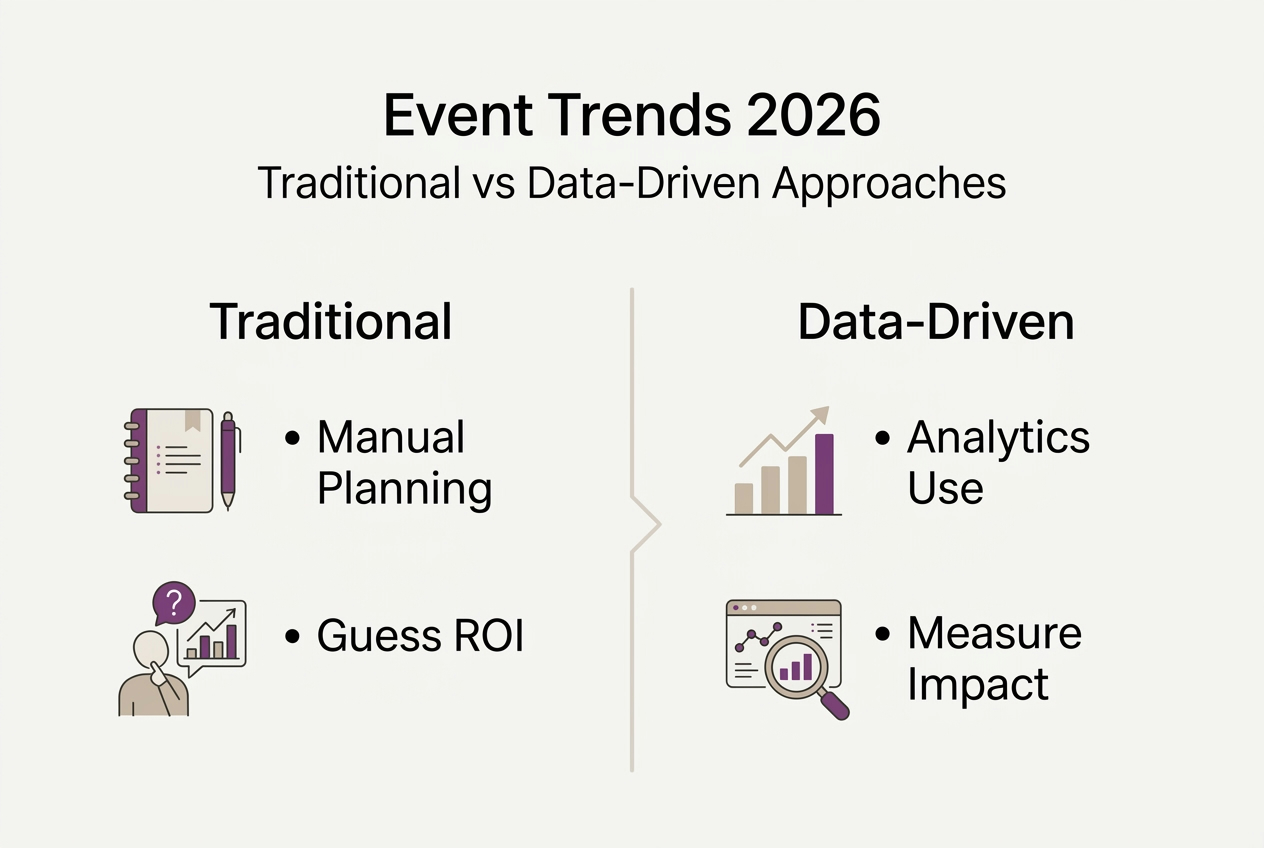
The event management industry has shifted from intuition-based planning to intelligence-driven decision making, with data analytics now guiding everything from venue selection to marketing channel allocation. This transformation affects how you approach every project phase, from initial concept development through post-event analysis. Professionals who embrace this shift gain measurable advantages over competitors still relying primarily on gut feelings and past experience.
Consider the stark differences between traditional and data-driven approaches:
| Approach | Planning Method | ROI Measurement | Registration Strategy |
| — | — | — |
| Traditional | Experience-based estimates | Post-event surveys only | Mass marketing across all channels |
| Data-driven | Predictive analytics and historical data | Real-time tracking and adjustment | Targeted campaigns based on audience insights |
The impact of this shift is quantifiable. Data-driven planning improves event ROI by up to 45% by reducing waste, optimising resource allocation, and increasing attendee satisfaction through personalisation. Additionally, the right channel mix can boost event registrations by 15% when you analyse which platforms your target audience actually uses rather than spreading efforts thinly across all options.
Essential digital tools and platforms you should master include predictive analytics software that forecasts attendance based on historical patterns, registration optimisation platforms that test different messaging and pricing strategies, audience engagement applications that capture real-time feedback during events, and post-event analysis tools that measure satisfaction and identify improvement opportunities. Many of these solutions integrate with each other, creating comprehensive systems that support every event phase.
The rise of hybrid and virtual event formats offers particular advantages:
- Geographic flexibility allowing you to reach audiences across India and internationally without travel constraints
- Cost efficiency reducing venue, catering, and logistics expenses whilst maintaining engagement quality
- Data capture opportunities providing detailed insights into attendee behaviour and preferences
- Environmental sustainability appealing to eco-conscious clients and attendees
- Scalability enabling you to accommodate fluctuating attendance without proportional cost increases
Understanding the hybrid vs virtual events impact on careers helps you position yourself for high-demand roles, whilst mastering hybrid event best practices ensures you deliver quality experiences across all formats. Tools like Instaform digital solutions streamline registration and data collection processes.
Pro Tip: Regularly evaluate your event metrics to refine channel mix and resource allocation, treating each project as a learning opportunity that informs future decisions. The most successful event managers maintain detailed records of what worked, what didn’t, and why, building proprietary knowledge that competitors cannot easily replicate.
Monitor evolving consumer preferences and sustainability for future-ready events
Attendee expectations have transformed dramatically over recent years, with modern audiences demanding personalised experiences that align with their values and provide genuine engagement rather than passive consumption. Understanding these shifting preferences separates competent event managers from exceptional ones who consistently deliver experiences that resonate deeply with participants. You must actively research what your target audiences want rather than assuming preferences remain constant.
Indian enterprises are increasingly shifting to intelligence-driven models and emphasising sustainability, reflecting broader societal concerns about environmental impact and corporate responsibility. This trend affects event planning at every level, from vendor selection through waste management strategies. Clients now specifically request sustainability credentials when evaluating potential event managers, making eco-friendly practices essential for competitive positioning.
Key sustainability trends you should integrate include:
- Waste reduction strategies like eliminating single-use plastics, implementing comprehensive recycling programmes, and donating leftover food to charitable organisations
- Green sourcing practices prioritising vendors with environmental certifications, local suppliers reducing transportation emissions, and sustainable material choices
- Energy efficiency measures using LED lighting, optimising climate control systems, and selecting venues with renewable energy sources
- Digital-first approaches reducing printed materials through mobile apps, QR codes, and electronic communications
- Carbon offset programmes calculating event emissions and investing in environmental projects to achieve carbon neutrality
The evidence is clear: incorporating eco-friendly practices is critical in modern event management, with clients increasingly making hiring decisions based partly on sustainability commitments. Beyond ethical considerations, these practices often reduce costs through efficiency improvements and waste elimination, creating win-win scenarios for both your business and the environment.
Practical steps to integrate sustainability include conducting waste audits at your events to identify reduction opportunities, building relationships with green vendors who share your values, educating clients about sustainability benefits rather than treating it as an optional add-on, and measuring your environmental impact to demonstrate continuous improvement. Exploring event management specialisations helps you identify niches where sustainability expertise commands premium positioning.
Competitive advantage comes from proactively responding to evolving expectations rather than waiting for clients to demand changes. Conduct regular market research through surveys, focus groups, and social media listening to understand what matters most to your target audiences. Analyse attendee feedback systematically after each event, looking for patterns that indicate shifting preferences. Stay informed about broader consumer trends in India that influence event expectations, from technology adoption rates to social values.
Explore professional training and certification with team i
Transforming knowledge into career success requires structured guidance from experienced professionals who understand India’s event management landscape. Team i offers comprehensive certification programmes designed specifically for aspiring event managers seeking to stay updated and competitive in 2026’s dynamic industry. With 23 years of industry experience and partnerships with DNA Entertainment Networks, the institute provides practical training that bridges classroom learning with real-world application.
Flexible learning options including online event management courses accommodate working professionals and students alike, ensuring geography and schedules don’t limit your development. The event management course details reveal how hands-on projects, internships, and real event participation build the practical skills employers value most. Recognised credentials significantly boost your employability, with the importance of certification in event management reflected in accelerated placement rates and career advancement opportunities. Explore how professional training can position you at the forefront of India’s thriving event industry.
Frequently asked questions
What is the best way to stay updated on event trends?
Combine continuous professional development through workshops and certifications with active networking in industry-specific online communities for optimal results. Supplement these foundational strategies by adopting data analytics tools and attending major conferences where you can observe cutting-edge practices firsthand. This multi-pronged approach ensures you capture trends from multiple sources rather than relying on any single information channel.
How can certification benefit event management careers in India?
Certifications provide recognised credentials that employers value when evaluating candidates, particularly in competitive job markets. Certification boosts employability by 35% in India’s event management sector, correlating with higher placement rates and faster career advancement. Beyond credential value, structured programmes compress years of learning into focused training periods whilst providing mentorship and industry connections that accelerate your professional growth.
What digital tools can help stay ahead in event management?
Data analytics platforms enable you to forecast event ROI and predict attendance patterns based on historical data and market conditions. Hybrid and virtual event solutions expand your reach beyond geographic limitations whilst reducing costs and environmental impact. Registration optimisation software, audience engagement applications, and post-event analysis tools create comprehensive systems supporting every project phase from initial planning through final evaluation.
Why is networking important for discovering trends early?
Professional connections provide insider perspectives on emerging practices before they become mainstream, giving you time to develop relevant skills ahead of peak demand. Active networkers discover new trends and technologies 25% faster than those relying solely on passive information consumption. Beyond trend discovery, networking relationships often translate directly into job opportunities, collaboration invitations, and mentorship that accelerates your career trajectory.
How does sustainability impact modern event management?
Clients increasingly make hiring decisions based partly on sustainability commitments, with eco-friendly practices becoming competitive differentiators rather than optional features. Incorporating waste reduction, green sourcing, and energy efficiency often reduces costs through improved efficiency whilst appealing to environmentally conscious attendees. Demonstrating measurable environmental impact through carbon tracking and offset programmes positions you as a forward-thinking professional aligned with broader societal values.