
Many aspiring event managers in India dismiss online diplomas as less credible than traditional degrees, yet this misconception overlooks the genuine career advantages these programmes offer. Online event management diplomas combine flexibility with industry-relevant skills, making them ideal for young professionals balancing work or personal commitments. This guide clarifies eligibility requirements, course content, and practical strategies to maximise your career prospects after earning your diploma. You’ll discover how to choose the right programme, understand the difference between diplomas and certifications, and leverage your qualification for meaningful opportunities in India’s thriving event industry.
Table of Contents
- Why Choose An Online Diploma In Event Management?
- Understanding Eligibility And Course Content For Online Diplomas
- Diploma Vs Certification In Event Management: What Suits Your Career?
- How To Maximise Career Opportunities After Earning An Online Event Management Diploma
- Explore Online Event Management Courses With Team I
- Frequently Asked Questions
Key takeaways
| Point | Details |
|---|---|
| Credibility and flexibility | Online diplomas in event management provide legitimate career pathways with the convenience of studying anywhere |
| Comprehensive skill development | Courses cover planning, budgeting, marketing, and vendor management to prepare you for diverse event roles |
| Eligibility requirements | Most programmes require completion of 12th standard with durations ranging from 6 months to 1 year |
| Work experience matters | Combining formal education with internships and live projects significantly improves job prospects |
| Industry recognition | Certification alongside diploma enhances employer confidence and opens doors to coordinator and planner positions |
Why choose an online diploma in event management?
Pursuing an online event management diploma offers distinct advantages for aspiring professionals in India who need flexibility without sacrificing quality education. You can study from anywhere, whether you’re in Mumbai, Bangalore, or a smaller city, eliminating the need to relocate or commute daily. This format allows you to balance work commitments, family responsibilities, or personal projects whilst building the skills employers value.
The curriculum in these programmes covers comprehensive skill sets from initial concept development through final event execution. You’ll learn budgeting techniques, vendor negotiation strategies, marketing approaches, and risk management protocols that apply directly to real-world scenarios. Courses are designed with industry input to ensure relevance, meaning you’re not learning outdated theories but current practices that event companies actually use.
Employers in India increasingly recognise online programme credentials when they come from reputable institutes with strong industry connections. The stigma that once surrounded distance learning has diminished as more professionals demonstrate competence gained through online formats. Cost effectiveness adds another compelling reason, as online diplomas typically require lower fees than traditional degree programmes whilst delivering comparable skill development.
Pro Tip: Look for programmes that include live project work or partnerships with event companies, as these features bridge the gap between theoretical knowledge and practical application, giving you tangible experience to discuss in job interviews.
Understanding eligibility and course content for online diplomas
Most online diploma programmes in event management set basic eligibility requirements at 12th standard completion or equivalent qualification, making them accessible to recent school leavers and career changers alike. Some institutes may accept students with relevant work experience even without formal educational qualifications, particularly if you’ve been involved in organising events informally. Course durations vary between 6 months for intensive full-time programmes and 1 year for part-time formats that accommodate working professionals.
Core modules typically include event planning fundamentals, where you learn to conceptualise themes and develop detailed timelines. Budgeting and financial management modules teach you to allocate resources efficiently and track expenses throughout the event lifecycle. Marketing and promotion sections cover digital strategies, social media campaigns, and traditional advertising methods to attract attendees. Vendor management and negotiation skills help you build supplier relationships and secure favourable contracts.
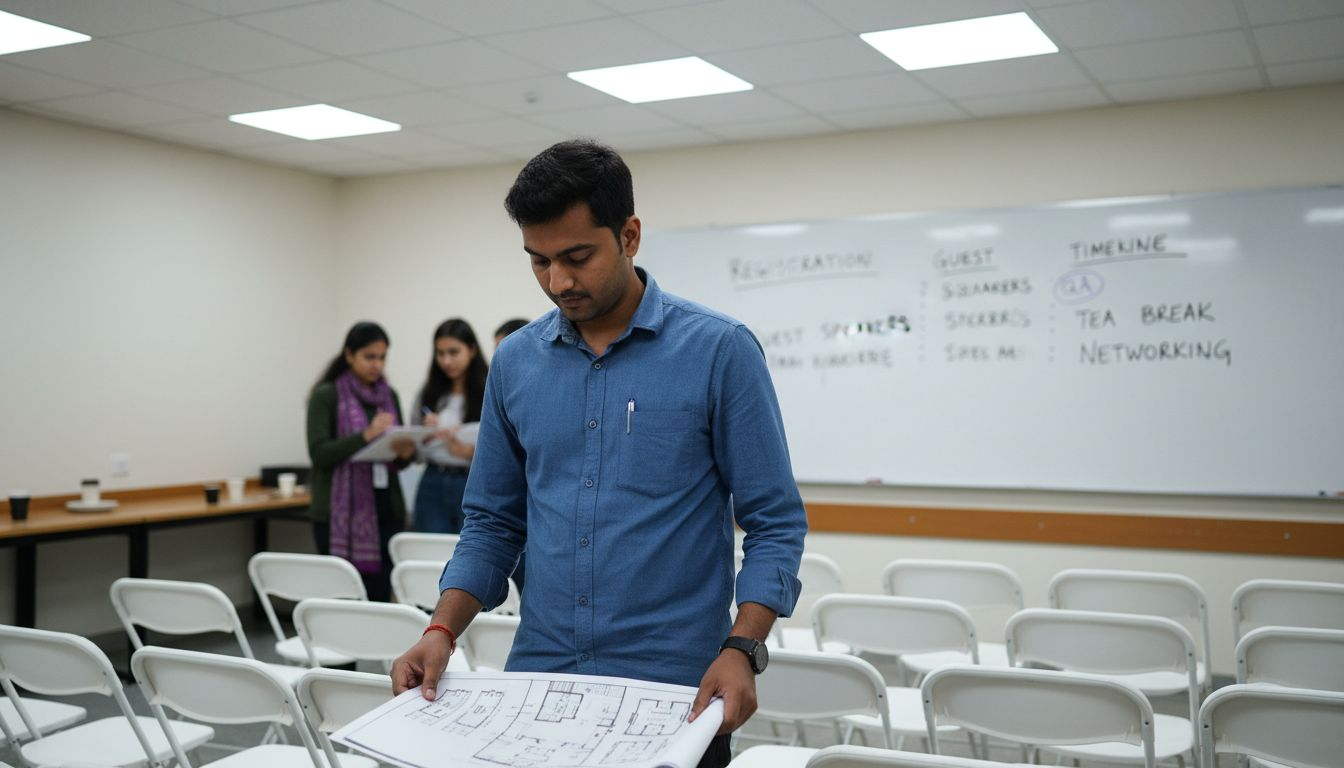
Many programmes now offer specialisations that let you focus on specific event types. Corporate event management concentrates on conferences, product launches, and team-building activities. Wedding planning specialisations cover cultural ceremonies, destination weddings, and coordination of multiple vendors. Sports event management addresses tournament organisation, athlete liaison, and spectator experience design.
| Module Category | Typical Topics Covered | Duration |
|---|---|---|
| Event Planning Fundamentals | Concept development, timeline creation, venue selection | 6-8 weeks |
| Budget and Finance | Cost estimation, expense tracking, sponsor management | 4-6 weeks |
| Marketing and Promotion | Digital campaigns, social media, traditional advertising | 4-6 weeks |
| Vendor Management | Supplier selection, contract negotiation, relationship building | 4-5 weeks |
| Specialisation Options | Corporate, wedding, sports, or social events | 8-10 weeks |
The essential skills you’ll develop extend beyond technical knowledge to include communication, problem-solving, and crisis management abilities. You’ll practise creating detailed event briefs, managing stakeholder expectations, and adapting plans when unexpected challenges arise.
Pro Tip: Before enrolling, verify whether the programme includes internship placements or live project opportunities, as these practical components significantly enhance your employability and provide real-world context for classroom learning.
Diploma vs certification in event management: what suits your career?
Understanding the distinction between diplomas and certifications helps you choose the credential that aligns with your career goals and current situation. A diploma represents a comprehensive programme that typically spans 6 to 12 months and covers a broad range of event management topics systematically. You’ll progress through foundational concepts, intermediate skills, and advanced applications, building a complete knowledge base that prepares you for entry-level to mid-level positions.
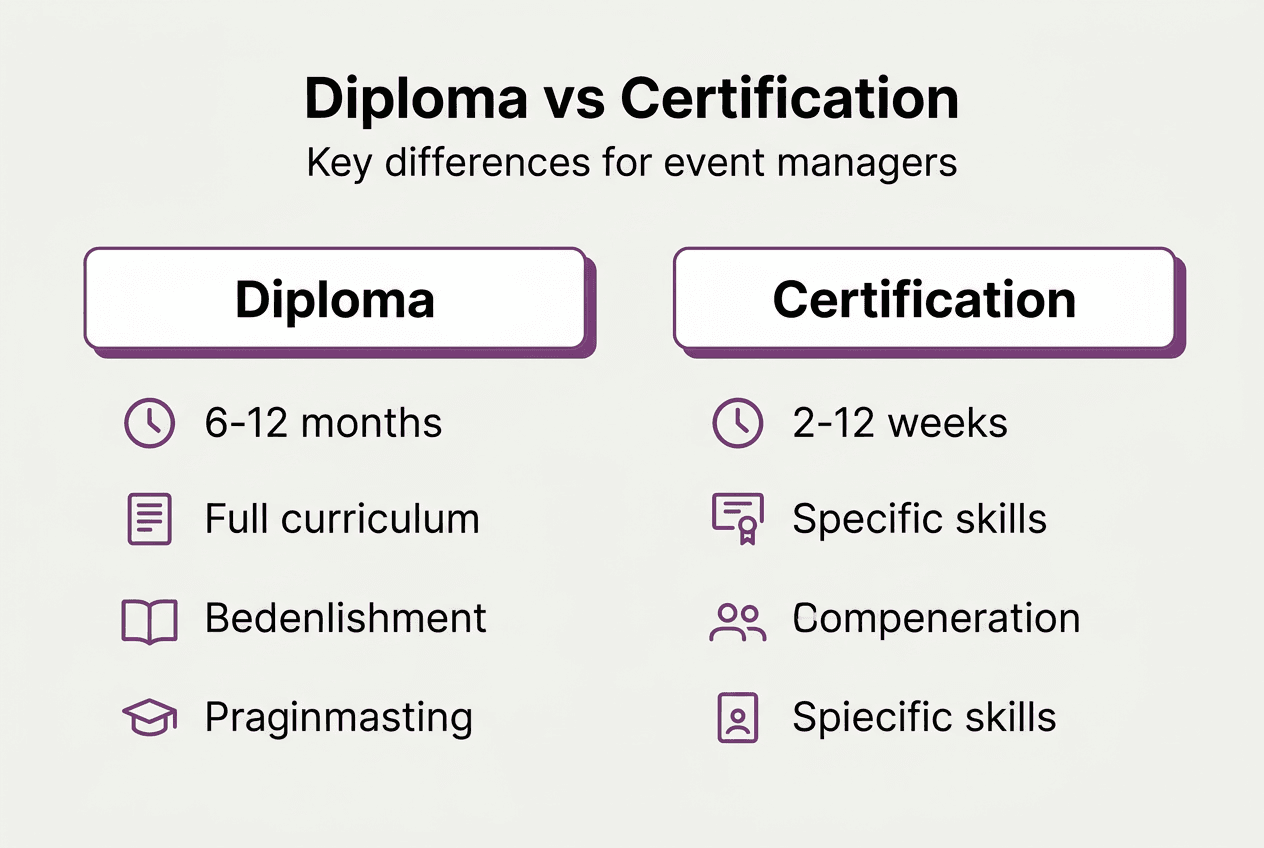
Certifications, by contrast, focus on specific skills or software tools and usually require shorter time commitments of a few weeks to three months. They work well for professionals who already have event experience and want to add specialised capabilities to their portfolio. For example, you might pursue a certification in event technology platforms, sustainable event practices, or digital marketing for events to complement your existing qualifications.
Diploma programmes generally yield higher placement rates because they demonstrate sustained commitment and comprehensive skill development to potential employers. The structured curriculum shows you’ve mastered multiple aspects of event management rather than just one narrow area. However, certifications add value when you’re upskilling within your current role or pivoting from a related field like hospitality or marketing.
| Aspect | Diploma | Certification |
|---|---|---|
| Duration | 6-12 months | 2 weeks to 3 months |
| Content Scope | Comprehensive coverage of event management | Focused on specific skills or tools |
| Cost Range | ₹30,000-₹1,50,000 | ₹5,000-₹40,000 |
| Best For | Career starters or career changers | Working professionals upskilling |
| Placement Support | Often included with dedicated teams | Limited or not provided |
| Industry Recognition | Higher for entry-level positions | Valued for specialised roles |
Consider your current position when deciding between these options. If you’re entering the event industry with no prior experience, a diploma provides the foundational knowledge and credibility you need. If you’ve been coordinating events informally or working in a related field, targeted certifications might accelerate your career progression more efficiently.
Some professionals pursue both credentials strategically, starting with a diploma to establish their foundation and later adding certifications as their career evolves and they identify specific areas for growth. This combined approach maximises both breadth and depth of expertise.
How to maximise career opportunities after earning an online event management diploma
Translating your diploma into tangible career advancement requires strategic action beyond simply completing coursework. Gaining practical work experience during or immediately after your studies significantly improves your job prospects and helps you apply theoretical knowledge in real settings. Seek internships with event companies, wedding planners, or corporate event departments, even if they’re unpaid initially, as the experience and connections you build prove invaluable.
Volunteering for community events, charity fundraisers, or cultural festivals provides hands-on opportunities to practise your skills whilst building your portfolio. Document each project with photographs, testimonials, and measurable outcomes like attendee numbers or funds raised. This portfolio becomes your proof of capability when applying for paid positions.
Building a professional network accelerates your career trajectory in event management. Follow these steps to expand your connections:
- Attend industry conferences, trade shows, and networking events where you can meet established professionals and potential employers face to face.
- Join online communities and professional associations specific to event management, participating actively in discussions and offering helpful insights.
- Connect with classmates and instructors from your diploma programme, as these relationships often lead to job referrals and collaborative opportunities.
- Reach out to event professionals on LinkedIn with personalised messages explaining your interest in their work and asking for informational interviews.
- Volunteer to assist at industry events, which puts you in direct contact with organisers and vendors whilst demonstrating your commitment.
Continuous learning keeps your skills current in an industry that evolves rapidly with new technologies and trends. Consider pursuing specialised certifications in areas like virtual event platforms, sustainable event practices, or specific event types that interest you. Attend workshops on emerging topics such as hybrid event formats or experiential marketing techniques.
When applying for positions, prominently feature your diploma credentials and highlight specific projects or skills gained during the programme. Tailor your application materials to each role, emphasising the aspects of your education most relevant to that particular position. The key benefits of structured online education include not just knowledge but also the credibility that formal qualifications provide to employers.
Pro Tip: Join professional associations like the Event and Entertainment Management Association or local event planner networks to access exclusive job boards, continued education opportunities, and mentorship programmes that accelerate your career growth beyond what individual effort alone can achieve.
Explore online event management courses with team I
team I provides comprehensive online event management diploma programmes specifically designed for aspiring professionals in India who want industry-relevant education with practical application. With 23 years of experience and strong connections to DNA Entertainment Networks, their courses combine theoretical foundations with real-world projects that prepare you for immediate employment. Students benefit from internship placements, live event participation, and direct access to industry professionals who share current practices and emerging trends.
The institute’s track record in placement support and industry recognition makes it a trusted choice for young professionals serious about building event management careers. You can explore detailed course information covering everything you need to know about curriculum, duration, and specialisation options. Ready to take the next step? Contact team I directly via WhatsApp to discuss your career goals and find the programme that best fits your needs.
Frequently asked questions
What is the duration of an online diploma in event management?
Most online diplomas in event management last between 6 months and 1 year depending on whether you choose full-time or part-time study formats. Full-time intensive programmes compress the curriculum into 6 to 8 months with more hours per week, whilst part-time options extend to 10 to 12 months to accommodate working professionals. Flexible scheduling allows you to progress at a pace that suits your other commitments without sacrificing educational quality.
Can I gain practical experience through an online diploma?
Many reputable online diplomas include internships, live projects, or collaborations with event companies to provide practical work experience alongside theoretical learning. These opportunities let you apply classroom concepts to real events, build your professional portfolio, and establish industry connections before graduation. When evaluating programmes, specifically ask about practical components and verify that they include hands-on elements rather than purely theoretical instruction.
Is an online diploma recognised by event employers in India?
Online event management diplomas from reputed institutes gain growing acceptance in the Indian event industry as employers increasingly value skills and practical knowledge over traditional degree formats. Credibility depends on the institute’s reputation, industry connections, and the quality of curriculum delivered. Combining your diploma with relevant certification credentials further enhances employer recognition and demonstrates your commitment to professional standards in the field.
What career paths can an online diploma in event management open?
An online diploma prepares you for diverse event management roles including event coordinator, event planner, marketing manager, logistics manager, and venue manager positions. You might specialise in corporate conferences, wedding planning, sports tournaments, or social celebrations depending on your interests and additional training. The foundational knowledge from your diploma provides the versatility to explore different event types and industries whilst building expertise in your chosen specialisation over time.